
ACL Tear Treatment in Delhi | Arthroscopic ACL Reconstruction



The Anterior Cruciate Ligament (ACL) is one of the four major ligaments that stabilize the knee joint. It connects the femur (thigh bone) to the tibia (shin bone) and plays a crucial role in controlling knee movement during activities such as running, jumping, pivoting, and sudden changes in direction. The ACL also prevents the shin bone from sliding too far forward in relation to the thigh bone, helping maintain knee stability.
An ACL tear occurs when this important ligament is stretched beyond its capacity or completely ruptures due to sudden twisting, impact, or excessive force. The injury may be partial (incomplete tear) or complete (full tear). ACL injuries are among the most common serious knee injuries, particularly in athletes and physically active individuals, and may also involve damage to the meniscus, cartilage, or other knee ligaments.
Early diagnosis and appropriate treatment are essential to restore knee stability, prevent additional joint damage, and help patients safely return to their normal daily activities or sports.
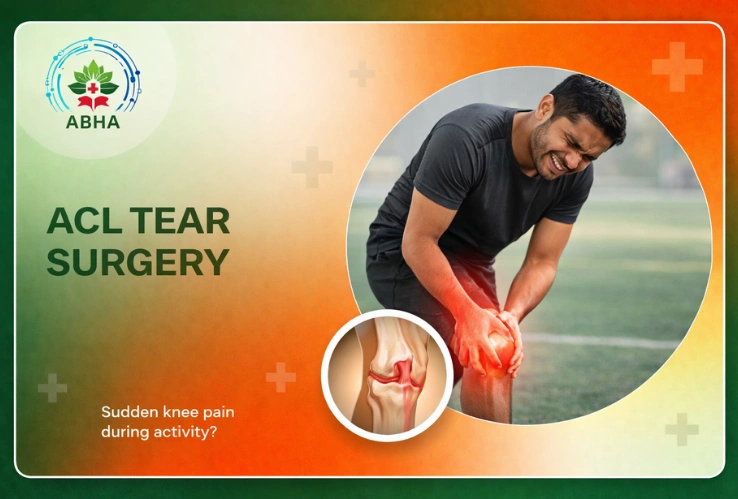
ACL injuries commonly occur during sports, physical activities, road accidents, or falls that place sudden stress on the knee joint. Interestingly, many ACL tears occur without direct contact, often resulting from sudden changes in body movement rather than a collision.
• Sports involving sudden stops or direction changes: Activities such as football, cricket, basketball, badminton, volleyball, and similar sports place significant stress on the ACL due to rapid acceleration, deceleration, and pivoting movements.
• Landing awkwardly after a jump: Improper landing mechanics can place excessive force on the knee joint, increasing the risk of an ACL injury.
• Sudden pivoting with the foot planted: Twisting the body while the foot remains firmly planted can overstretch or tear the ACL.
• Direct blow or collision to the knee: High-impact contact during sports or accidents may damage the ACL along with other supporting knee structures.
• Road traffic accidents and falls: Trauma caused by accidents or heavy falls may result in partial or complete ACL tears, particularly when the knee is twisted during impact.
Most sports-related ACL injuries occur without direct contact and are typically caused by sudden deceleration, twisting, pivoting, or incorrect landing techniques rather than collisions with another player.
The symptoms of an ACL injury usually appear immediately after the injury and can vary depending on the severity of the ligament damage. Recognizing these warning signs early allows prompt medical evaluation and reduces the risk of further damage to the knee.
• A popping sound or sensation: Many patients report hearing or feeling a sudden "pop" inside the knee at the moment the ligament tears.
• Sudden severe knee pain: Intense pain develops immediately after the injury, making it difficult to continue physical activity.
• Rapid swelling: Swelling often develops within a few hours due to bleeding inside the knee joint following the ligament injury.
• Knee instability: The knee may feel unstable or as though it may suddenly "give way" while standing, walking, or changing direction.
• Difficulty walking or bearing weight: Pain, swelling, and instability often make it difficult to walk normally or place full weight on the injured leg.
• Reduced range of motion: Patients frequently experience difficulty fully bending or straightening the knee because of swelling, pain, and internal joint damage.
If you experience any of these symptoms after a knee injury, consult an experienced orthopedic specialist as soon as possible. Delaying evaluation may increase the risk of additional damage to the meniscus, cartilage, and surrounding ligaments, making treatment and recovery more complex.
Accurate diagnosis is essential for determining the severity of the ACL injury and selecting the most appropriate treatment plan. Orthopedic specialists combine a detailed medical history, physical examination, and imaging studies to confirm the diagnosis and identify any associated injuries involving the meniscus, cartilage, or other ligaments.
During the consultation, the orthopedic specialist reviews your injury history, symptoms, and activity level before performing a detailed physical examination. The injured knee is compared with the healthy knee to evaluate stability, swelling, tenderness, and ligament function. In many cases, a thorough clinical examination provides a strong indication of an ACL tear even before imaging is performed.
• X-ray: Although an X-ray does not directly show the ACL, it helps identify associated bone fractures or other bony injuries that may have occurred during the trauma.
• MRI (Magnetic Resonance Imaging): MRI is the most reliable imaging test for confirming an ACL tear. It clearly shows the location and severity of the ligament injury while also detecting associated damage to the meniscus, cartilage, tendons, and other soft tissues within the knee.
ACL injuries are generally classified into three grades based on the extent of ligament damage. Understanding the severity of the tear helps orthopedic surgeons recommend the most appropriate treatment approach.
• Grade 1 (Mild Sprain): The ligament is stretched but remains intact. The knee usually stays stable, and conservative treatment with rest and physiotherapy is often sufficient.
• Grade 2 (Partial Tear): The ACL is partially torn, resulting in some looseness or instability of the knee joint. Treatment depends on the patient's activity level, symptoms, and overall knee stability.
• Grade 3 (Complete Tear): The ligament is completely torn, causing significant knee instability. This is the most severe form of ACL injury and often requires arthroscopic ACL reconstruction surgery, particularly for active individuals or patients experiencing recurrent knee instability.
Treatment for an ACL tear depends on several factors, including the severity of the ligament injury, the patient's age, activity level, occupation, sports participation, and whether other knee structures such as the meniscus or cartilage have also been damaged. After a detailed clinical examination and MRI evaluation, the orthopedic specialist recommends the most appropriate treatment plan based on your individual condition.
While some patients with minor injuries may recover successfully through conservative treatment, those with complete ACL tears or persistent knee instability often require surgical reconstruction to restore normal knee function and reduce the risk of future joint damage.
Non-surgical management may be recommended for patients with partial ACL tears, individuals with lower physical activity levels, or patients whose knees remain stable despite the injury. The primary goal is to reduce pain, improve strength, and restore knee function without surgery.
• Knee bracing for stability: A supportive knee brace helps stabilize the joint, reduces unnecessary movement, and protects the healing ligament during daily activities.
• Crutches during the initial phase: Crutches help reduce weight-bearing on the injured knee, allowing swelling and pain to decrease while preventing additional injury.
• Structured physiotherapy: Once pain and swelling improve, a personalized physiotherapy program focuses on restoring knee movement, strengthening surrounding muscles, improving balance, and gradually returning to normal activities.
Surgical reconstruction is generally recommended for patients with complete ACL tears or persistent knee instability. The procedure replaces the torn ligament with a healthy tendon graft, restoring knee stability and helping patients safely return to sports and physically demanding activities.
Surgery is commonly recommended when:
• Complete ACL tear: The ligament has completely ruptured, making the knee unstable during walking, running, or sports.
• Persistent knee instability: The knee repeatedly feels unstable or "gives way" during routine movements despite rehabilitation.
• Active sports participation: Athletes and physically active individuals often require reconstruction to safely return to pivoting or high-impact sports.
• Recurrent knee buckling: Frequent episodes of knee giving way increase the risk of further damage to cartilage and the meniscus.
• Associated meniscus injury: Combined ACL and meniscus injuries frequently require surgical treatment to preserve long-term knee function.
• Physiotherapy has not restored stability: If conservative treatment fails to provide adequate knee stability, surgery may be recommended for long-term recovery.
Seeking prompt medical evaluation after an ACL injury is extremely important. Delaying treatment when surgery is clinically indicated can increase the risk of additional damage inside the knee and may result in a more complicated recovery. Early diagnosis allows patients and orthopedic surgeons to choose the most appropriate treatment before secondary injuries develop.
• Prevents progressive knee instability: Untreated ACL tears may cause repeated episodes of knee instability, increasing stress on other structures inside the joint.
• Protects the meniscus and cartilage: Repeated instability can damage the meniscus and joint cartilage, leading to more extensive injuries that may require additional treatment.
• Reduces the risk of early osteoarthritis: Persistent joint instability and cartilage damage may increase the likelihood of developing osteoarthritis earlier in life.
• Shorter and more effective rehabilitation: Timely treatment often leads to a smoother rehabilitation process and improves the chances of returning to normal activities sooner.
• Reduces surgical complexity: Treating the injury before additional knee structures become damaged may simplify the surgical procedure and improve long-term outcomes.
Not every ACL tear requires immediate surgery, but every suspected ACL injury should be evaluated promptly by an experienced orthopedic specialist so that the most appropriate treatment plan can be developed without unnecessary delay.
Modern ACL reconstruction in Delhi is commonly performed using arthroscopic (keyhole) surgery, a minimally invasive technique that utilizes a high-definition camera and specialized surgical instruments inserted through tiny incisions. Compared to traditional open surgery, arthroscopy offers greater surgical precision, less tissue damage, reduced pain, and faster recovery.
During the procedure, the damaged ACL is removed and replaced with a healthy tendon graft, restoring knee stability while preserving the surrounding healthy tissues. Arthroscopic reconstruction has become the gold standard for treating complete ACL tears in active patients.
• MRI confirms the injury: Detailed MRI imaging identifies the location and severity of the ACL tear while detecting any associated meniscus or cartilage injuries.
• Arthroscopy is performed: Tiny incisions are created to insert the arthroscope and specialized surgical instruments into the knee joint.
• The torn ACL is removed: The damaged ligament is carefully removed while preserving healthy surrounding tissues.
• A tendon graft replaces the ACL: A healthy tendon graft is positioned in place of the torn ligament to restore knee stability.
• Specialized implants secure the graft: Modern fixation devices hold the graft firmly in position, allowing it to gradually integrate with the surrounding bone during healing.
• Rehabilitation begins soon after surgery: A structured physiotherapy program starts early to restore knee movement, strength, balance, and overall joint function.
The replacement ligament used during ACL reconstruction is called a graft. Your orthopedic surgeon selects the most suitable graft after considering your age, activity level, sports participation, and overall knee condition.
• Patellar tendon graft: Taken from the tendon connecting the kneecap to the shinbone and commonly used for athletes because of its excellent strength and stability.
• Hamstring tendon graft: Harvested from the hamstring muscles at the back of the thigh and widely used because of reduced post-operative discomfort and reliable long-term outcomes.
• Quadriceps tendon graft: Obtained from the tendon above the kneecap and may be recommended for selected patients depending on knee anatomy and previous injuries.
• Cadaver (Allograft) tissue: Donor tissue may be considered in carefully selected patients, particularly revision surgeries or situations where harvesting the patient's own tendon is not ideal.
Every graft option has its own advantages, recovery characteristics, and potential limitations. Your orthopedic surgeon will discuss the most suitable choice based on your lifestyle, sports goals, and medical condition.
• Small incisions and minimal blood loss: Tiny surgical incisions reduce tissue damage and minimize bleeding during the procedure.
• Less post-operative pain: Patients generally experience less discomfort compared to traditional open knee surgery.
• Faster recovery: Minimally invasive surgery supports quicker healing and an earlier return to rehabilitation.
• Better cosmetic results: Small incisions leave minimal scarring, improving the overall cosmetic appearance of the knee.
• Lower infection risk: Smaller wounds reduce the likelihood of post-operative infection and wound-related complications.
• Shorter hospital stay: Most patients are discharged within a short period after surgery, allowing recovery to continue comfortably at home.
The cost of ACL reconstruction surgery in Delhi depends on several factors, including the hospital, surgeon's expertise, type of graft used, implants, hospital room category, and post-operative rehabilitation. Since every ACL injury is unique, the final treatment cost is determined after a detailed orthopedic consultation, MRI evaluation, and treatment planning.
Patients should remember that choosing an experienced orthopedic surgeon and quality implants plays an important role in achieving long-term knee stability and successful recovery. Many health insurance plans also cover ACL reconstruction when it is medically necessary, helping reduce the patient's out-of-pocket expenses.
| Treatment | Estimated Cost (₹) |
|---|---|
| Arthroscopic ACL Reconstruction | ₹1,20,000 – ₹2,80,000 |
| Revision ACL Surgery | ₹2,00,000 – ₹3,50,000+ |
These prices are approximate estimates only and should not be considered fixed quotations. The final treatment cost depends on your medical condition, the complexity of the ligament injury, associated meniscus or cartilage damage, the graft selected, implant requirements, rehabilitation needs, and the hospital where the surgery is performed. A personalized estimate is provided after consultation and diagnostic evaluation.
• Hospital and room category: Treatment costs vary depending on the hospital's facilities, room selection, operation theatre infrastructure, and overall level of medical care.
• Surgeon's experience: Highly experienced orthopedic and sports medicine surgeons may have different consultation and surgical charges based on their qualifications and expertise.
• Type of graft used: The choice between hamstring tendon, patellar tendon, quadriceps tendon, or allograft tissue may influence the overall treatment cost.
• Implants and fixation devices: Specialized implants used to secure the graft contribute to the total surgical expenses.
• Health insurance coverage: Many insurance policies cover medically necessary ACL reconstruction, reducing the patient's financial burden depending on policy terms.
• Post-operative physiotherapy: Rehabilitation sessions are an essential part of successful recovery and should be considered when planning the overall treatment cost.
Successful recovery after ACL reconstruction depends not only on the surgery itself but also on consistent rehabilitation and proper post-operative care. Every patient's recovery timeline is different and depends on factors such as the severity of the injury, graft type, overall health, commitment to physiotherapy, and adherence to the surgeon's recommendations.
| Recovery Milestone | Typical Timeline |
|---|---|
| Walking with Support | 1–2 Weeks |
| Return to Office Work | 2–4 Weeks |
| Light Exercise | 2–3 Months |
| Running | 4–6 Months |
| Return to Sports | 9–12 Months |
These timelines are general estimates and may vary based on individual healing, surgical technique, graft selection, and rehabilitation progress. Your orthopedic surgeon and physiotherapist will customize your recovery program according to your specific condition.
Physiotherapy is one of the most important components of successful ACL reconstruction recovery. A structured rehabilitation program helps restore knee function, rebuild muscle strength, and safely prepare patients for returning to daily activities and sports.
• Restores knee range of motion: Early rehabilitation helps patients gradually regain normal knee bending and straightening while preventing stiffness.
• Strengthens surrounding muscles: Progressive strengthening of the quadriceps, hamstrings, calves, and hip muscles provides better support for the reconstructed ligament.
• Improves balance and proprioception: Specialized exercises restore coordination, stability, and the body's ability to control knee movement during daily activities and sports.
• Prevents joint stiffness: Regular supervised exercises help maintain flexibility and reduce the risk of scar tissue formation that could limit movement.
• Reduces the risk of reinjury: Proper rehabilitation improves knee mechanics and significantly lowers the chances of damaging the reconstructed ACL or other knee structures in the future.
Rehabilitation is usually completed in progressive phases, beginning with pain control and restoring movement, followed by muscle strengthening, balance training, functional exercises, and finally sport-specific conditioning for patients planning to return to athletic activities. Consistent physiotherapy remains one of the most important factors influencing long-term surgical success.
ACL reconstruction is recommended for many patients with significant ligament injuries, particularly when knee stability has been affected. However, not every ACL tear requires surgery. The decision depends on several medical and lifestyle factors, including the severity of the injury, activity level, occupation, age, and the presence of associated knee damage. After reviewing your MRI scans and performing a detailed clinical examination, the orthopedic surgeon will recommend the most appropriate treatment plan.
• Age and activity level: Young adults, athletes, physically active individuals, and people whose occupations require frequent running, climbing, or heavy physical activity are often good candidates for ACL reconstruction.
• Severity of the ACL tear: Patients with complete (Grade 3) ACL tears and persistent knee instability are more likely to benefit from surgical reconstruction than those with mild or partial injuries.
• Associated meniscus or cartilage injury: Combined injuries involving the meniscus, cartilage, or other ligaments frequently require surgical treatment to restore proper knee function and reduce the risk of long-term joint damage.
• Recurrent knee instability: If the knee repeatedly gives way during walking, sports, or routine daily activities despite rehabilitation, ACL reconstruction is often recommended.
• Previous knee surgery or overall health: Your surgeon also considers any previous knee operations, medical conditions, bone quality, and overall fitness before recommending surgery.
A thorough orthopedic consultation, supported by MRI findings and physical examination, helps determine whether ACL reconstruction is the best treatment option for your individual condition and long-term activity goals.
At AbhaCare, we help patients access advanced ACL tear treatment through experienced orthopedic and sports medicine specialists at trusted hospitals across Delhi NCR. From diagnosis and hospital coordination to surgery, rehabilitation, and follow-up care, our team provides personalized support throughout every stage of treatment.
• Experienced orthopedic and sports medicine surgeons: Consultation and treatment by highly qualified specialists experienced in managing sports injuries, ligament reconstruction, and complex knee disorders.
• Access to advanced arthroscopic ACL reconstruction: Treatment is provided at accredited hospitals equipped with modern arthroscopic technology, advanced operation theatres, and experienced surgical teams.
• Personalized treatment planning: Every patient receives an individualized treatment plan based on injury severity, activity level, sports participation, MRI findings, and recovery goals.
• Insurance assistance and hospital coordination: Our dedicated team helps patients understand insurance coverage, complete documentation, coordinate hospital admission, and simplify the treatment process.
• Dedicated medical coordinator: A single point of contact assists throughout consultation, surgery scheduling, hospital admission, discharge planning, and follow-up appointments.
• Structured rehabilitation guidance: Patients receive complete support regarding physiotherapy schedules, recovery milestones, home exercises, and return-to-sports planning after surgery.
Our goal is to provide safe, evidence-based, and patient-focused orthopedic care while helping every patient regain knee stability, confidence, and mobility with comprehensive support from consultation through complete rehabilitation.
Through our network of experienced orthopedic surgeons and accredited hospitals, AbhaCare helps patients across Delhi NCR access advanced ACL reconstruction surgery, sports injury treatment, and comprehensive rehabilitation services.
• Vikaspuri: Fast access to orthopedic consultation, MRI evaluation, arthroscopic ACL surgery, and physiotherapy support.
• Janakpuri: Complete treatment coordination for ACL injuries, meniscus tears, and sports-related knee conditions.
• Dwarka: Advanced arthroscopic ligament reconstruction with experienced orthopedic specialists and rehabilitation guidance.
• Uttam Nagar: Personalized consultation, diagnosis, surgery planning, and recovery support close to your location.
• Rajouri Garden: Comprehensive orthopedic care through trusted hospitals equipped with modern arthroscopic surgical facilities.
• Paschim Vihar: Access to experienced sports medicine specialists, MRI diagnostics, and structured physiotherapy programs.
• Punjabi Bagh: Specialized treatment for ACL tears, meniscus injuries, ligament reconstruction, and post-operative rehabilitation.
• West Delhi: End-to-end orthopedic care through accredited hospitals, experienced surgeons, and personalized rehabilitation plans.
• South Delhi: Advanced sports injury management, minimally invasive knee surgery, and complete recovery guidance.
• East Delhi: Dedicated support for diagnosis, surgery, physiotherapy, follow-up care, and long-term knee health.
• North Delhi: Access to experienced orthopedic specialists, advanced arthroscopic surgery, and evidence-based rehabilitation programs.
If you have experienced a knee injury, persistent instability, or suspect an ACL tear, do not delay seeking medical attention. Early diagnosis and appropriate treatment can help prevent additional damage to the knee joint and improve long-term recovery. At AbhaCare, we are committed to helping every patient receive advanced ACL tear treatment, expert surgical care, and comprehensive rehabilitation support for a safe return to daily activities and sports.
Some partial tears (Grade 1–2) may be managed with physiotherapy and bracing, particularly in less active patients. Complete tears (Grade 3) causing instability generally require surgical reconstruction, especially for athletes and physically active individuals.
Arthroscopic ACL reconstruction has a high success rate, and most patients regain good knee stability and function when they complete a full rehabilitation program under professional guidance.
Arthroscopic ACL reconstruction typically costs ₹1.2 lakh to ₹2.8 lakh in Delhi, depending on the hospital, graft type, implants, and surgeon's fees. Revision surgery costs more due to added complexity.
Walking with support usually begins within 1–2 weeks. Light exercise resumes around 2–3 months, running by 4–6 months, and return to competitive sports typically takes 9–12 months with consistent physiotherapy.
ACL tear is a common knee injury that affects stability, movement, and daily activities. It usually occurs during sports, sudden twisting, or accidents. At AbhaCare, we help patients access advanced ACL tear surgery in Delhi through experienced orthopedic surgeons and trusted hospitals in Vikaspuri, West Delhi, and nearby areas. We ensure safe treatment, minimally invasive procedures, and faster recovery for long-term knee stability.
Get advanced ACL tear surgery in Delhi with experienced orthopedic surgeons.