
Cataract Surgery
Cost in Delhi



Cataract is a common eye condition where the natural lens becomes cloudy, leading to blurred or reduced vision. As cataracts develop, vision gradually worsens and may affect daily activities.
At AbhaCare, we help patients access advanced cataract surgery in Delhi through experienced eye specialists and trusted hospitals in Vikaspuri, West Delhi, and nearby areas.
Modern eye surgery techniques ensure safe treatment with faster recovery and improved vision.
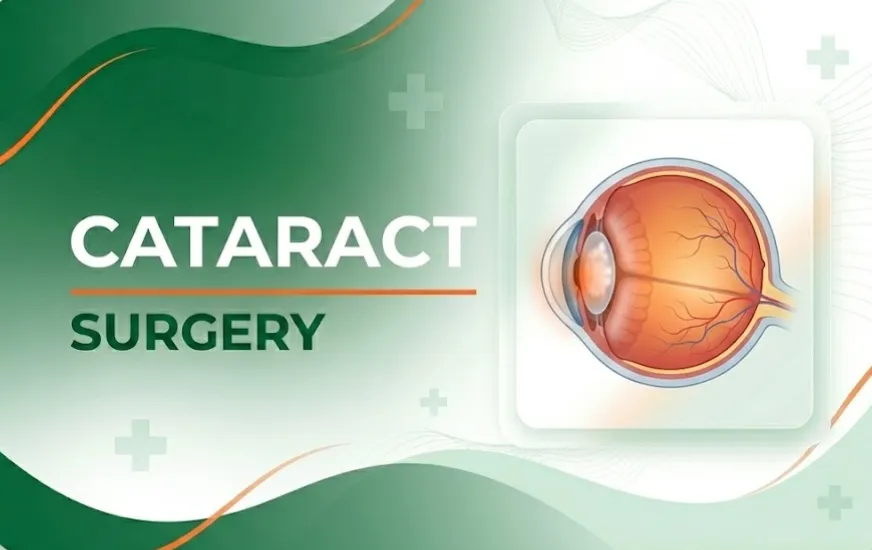
A cataract forms when proteins in the eye lens break down, causing cloudiness and vision problems.
• Nuclear cataract: Affects the center of the
lens and gradually reduces distance vision.
• Cortical cataract: Develops at the edges of
the lens and causes glare issues.
• Posterior subcapsular cataract: Forms at the
back of the lens and affects reading vision.
These different types of cataracts may affect vision in different ways depending on their location and severity.
Understanding how a cataract forms helps in early detection and prevention.
• Aging: The most common cause due to natural
lens degeneration.
• Diabetes: High blood sugar increases cataract
risk.
• Long-term use of certain medications:
Steroids may contribute to cataract formation.
• Eye injury or trauma: Physical injury may
damage the lens.
• Exposure to UV rays: Long-term sun exposure
can affect the eye lens.
• Smoking and alcohol use: These habits
increase cataract risk.
• Increasing age: Risk increases after 50
years.
• Family history: Genetic factors may play a
role.
• Poor nutrition: Lack of vitamins affects eye
health.
• Prolonged screen exposure: Continuous digital
usage strains the eyes.
• Lack of regular eye exam: Delayed detection
may worsen condition.
Early diagnosis through a proper eye exam can help detect cataracts in the early stages.
Common symptoms of cataracts include:
• Blurred or cloudy vision: Vision becomes hazy
over time.
• Difficulty seeing at night: Reduced clarity
in low light.
• Sensitivity to light: Bright lights may cause
discomfort.
• Faded colors: Colors may appear dull or
yellowish.
• Frequent changes in glasses prescription:
Vision keeps changing.
In the early stages, doctors may recommend eye drops and monitoring, but surgery is the only permanent treatment.
There are different types of cataract surgery available depending on the patient’s condition.
• Phacoemulsification: Ultrasound-based modern
cataract removal technique.
• Manual small incision surgery: Traditional
but effective method.
• Advanced laser cataract surgery:
High-precision laser-assisted procedure.
All procedures involve removing the cataract and replacing it with an artificial lens.
After removing the cataract, doctors implant intraocular lenses (IOLs) to restore vision.
• Monofocal lens: Provides clear vision at one
distance.
• Standard monofocal IOLs: Most commonly used
and cost-effective option.
• Multifocal lenses: Helps with both near and
distance vision.
• Toric lenses: Corrects astigmatism along with
cataract.
Choosing the right intraocular lenses IOLs depends on your vision needs and budget.
The cost of cataract surgery in Delhi depends on several factors such as lens type, hospital, and surgeon expertise.
• Basic surgery with monofocal IOLs: ₹10,000 –
₹25,000.
• Standard cataract surgery: ₹25,000 –
₹50,000.
• Advanced laser surgery with premium lenses:
₹60,000 – ₹1,20,000.
Overall, the cataract surgery cost in Delhi varies based on the type of cataract surgery and lens selection.
• Type of cataract surgery: Laser or
traditional method selection.
• Type of lens: Monofocal lens or premium
IOLs.
• Hospital facilities: Infrastructure and
equipment quality.
• Surgeon’s experience: Expertise of the eye
specialist.
• Diagnostic tests and eye exam: Pre-surgery
evaluation costs.
Choosing advanced options may increase cost but improves vision quality and comfort.
A detailed eye exam is done to diagnose cataract.
Doctor recommends suitable intraocular lenses IOLs.
The procedure involves removing the cataract and placing an artificial lens.
Most patients are discharged the same day.
Recovery is quick with proper care and medications.
• Experienced eye specialists: Skilled doctors
for safe treatment.
• Advanced cataract surgery in Delhi: Modern
techniques for better vision.
• Multiple lens options: Monofocal IOLs and
premium lenses available.
• Affordable cost of cataract surgery:
Budget-friendly options.
• Trusted hospitals in Delhi: Treatment at
reliable healthcare facilities.
• End-to-end patient support: Assistance from
diagnosis to recovery.
We ensure safe and effective vision correction with modern treatment.
• Vikaspuri: Easy access to consultation and
treatment services.
• Janakpuri: Nearby hospital and specialist
availability.
• Uttam Nagar: Support for patients seeking
quick treatment.
• Dwarka: Coverage across major hospitals in
Dwarka.
• West Delhi: Complete support across West
Delhi areas.
• South Delhi: Access to advanced healthcare
facilities.
• North Delhi: Treatment support across
multiple hospitals.
• East Delhi: Assistance for patients across
East Delhi.
Yes, cataract surgery is one of the safest and most commonly performed eye surgeries.
It usually takes 15–30 minutes.
Surgery is required when cataracts significantly affect vision.
In early stages, vision may be managed with glasses or eye drops, but surgery is the only permanent solution.
After surgery, patients receive post-operative care and follow-up support, including eye care instructions and regular check-ups. AbhaCare focuses on safe recovery, improved vision clarity, and long-term eye health for a smooth and comfortable healing process.
If you are facing vision problems, get advanced cataract surgery in Delhi with the best doctors and modern technology.