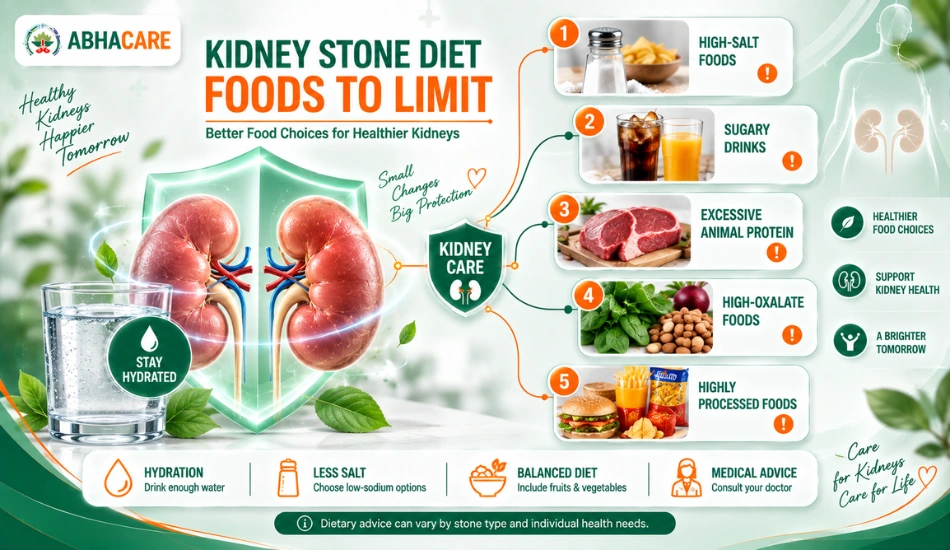
The five foods to limit if you're prone to kidney stones are: high-oxalate vegetables like spinach and beets, salty and processed foods, excess animal protein (red meat, organ meats, shellfish), high-dose vitamin C supplements, and sugary or cola-based drinks. These all raise the concentration of stone-forming compounds — oxalate, calcium, or uric acid — in urine. The specific foods to avoid can vary by stone type, so dietary changes are most effective when guided by a doctor who knows which kind of stone you're prone to.
Why Diet Matters for Kidney Stones
Kidney stones form when certain substances in urine — usually calcium, oxalate, or uric acid — become concentrated enough to crystallize. Diet doesn't cause kidney stones on its own, but for people prone to them, certain foods make that crystallization more likely by raising the levels of these substances in urine.
The good news: for most people, this doesn't mean cutting out entire food groups — it means moderation, smart pairing, and staying well hydrated. Here are the five to pay closest attention to.
1. High-Oxalate Foods
Oxalate is a natural compound found in many plant foods. When it combines with calcium in the urine, it forms calcium oxalate — the most common type of kidney stone.
Foods highest in oxalate:
- Spinach (one of the most concentrated sources)
- Beets (both roots and greens)
- Rhubarb
- Almonds and cashews
- Sweet potatoes
- Chocolate and cocoa powder
- Bran cereals
The good news: you don't need to eliminate these — many are otherwise nutritious. Pairing an oxalate-rich food with a calcium-rich one (like spinach with a sprinkle of paneer, or nuts mixed into yogurt) helps the calcium and oxalate bind together in your stomach before they ever reach your kidneys, reducing the amount that ends up in your urine.
2. Salty and Processed Foods
High sodium intake is one of the most overlooked contributors to kidney stones. Excess salt forces your kidneys to excrete more calcium into your urine — and more calcium in your urine means more opportunity for it to combine with oxalate and form stones.
Watch for sodium in:
- Packaged snacks, papad, and namkeen
- Canned soups and vegetables
- Pickles and processed condiments
- Fast food and frozen ready-to-eat meals
- Processed and cured meats
Most health guidelines recommend keeping sodium under roughly 2,300 mg a day — about one teaspoon of salt total, including what's hidden in packaged food, not just what you add at the table.
3. Excess Animal Protein
Diets heavy in animal protein — red meat, organ meats, poultry, eggs, and shellfish — can raise uric acid levels and lower citrate, a compound that normally helps prevent stones from forming. This matters most for people prone to uric acid stones, but it can affect calcium-based stones too.
Foods to moderate:
- Red meat (mutton, beef)
- Organ meats (liver)
- Shellfish (prawns, crab)
- Large portions of poultry, fish, and eggs
This doesn't mean going protein-free — it means being mindful of portion size and balancing animal protein with plant-based sources like lentils (dal) and beans.
4. High-Dose Vitamin C Supplements
Vitamin C from food is generally fine — the concern is specifically with high-dose supplements. Excess vitamin C can be converted by the body into oxalate, adding to the load your kidneys have to process.
If you take vitamin C supplements regularly, especially at high doses, it's worth discussing this with your doctor — particularly if you have a history of kidney stones. Getting vitamin C from fruit (citrus, guava, amla) in normal dietary amounts isn't the same concern as concentrated supplement doses.
5. Sugary Drinks and Colas
Sugary sodas and colas contribute to kidney stone risk in two ways: high fructose content can raise uric acid levels, and colas specifically contain phosphoric acid, which has been linked to increased stone risk. Regular soda intake is also linked to weight gain, which independently raises kidney stone risk.
Better alternatives:
- Plain water (the single most protective habit for stone prevention)
- Coconut water
- Buttermilk (chaas)
- Fresh lime water without added sugar
The Habit That Matters Most: Hydration
Across every type of kidney stone, staying well hydrated is the most consistently protective habit. Adequate fluid intake dilutes urine, making it harder for stone-forming crystals to concentrate. Aim for pale yellow urine as a rough guide, and increase intake further in hot weather or with physical activity.
Does This Apply to Everyone the Same Way?
Not quite — the ideal diet depends on which type of kidney stone you're prone to:
- Calcium oxalate stones (most common) — limit high-oxalate foods and sodium; don't cut calcium, pair it instead
- Uric acid stones — limit animal protein and purine-rich foods (organ meats, shellfish)
- Calcium phosphate stones — watch animal protein and foods that make urine more alkaline
This is exactly why general lists like this one are a starting point, not a personalized plan — a urologist can confirm your stone type (often from a prior stone analysis or urine test) and tailor dietary advice accordingly. If your stones keep coming back or you're unsure which type applies to you, it's a good idea to Book a consultation with a urologist for a proper evaluation.
When to See a Doctor
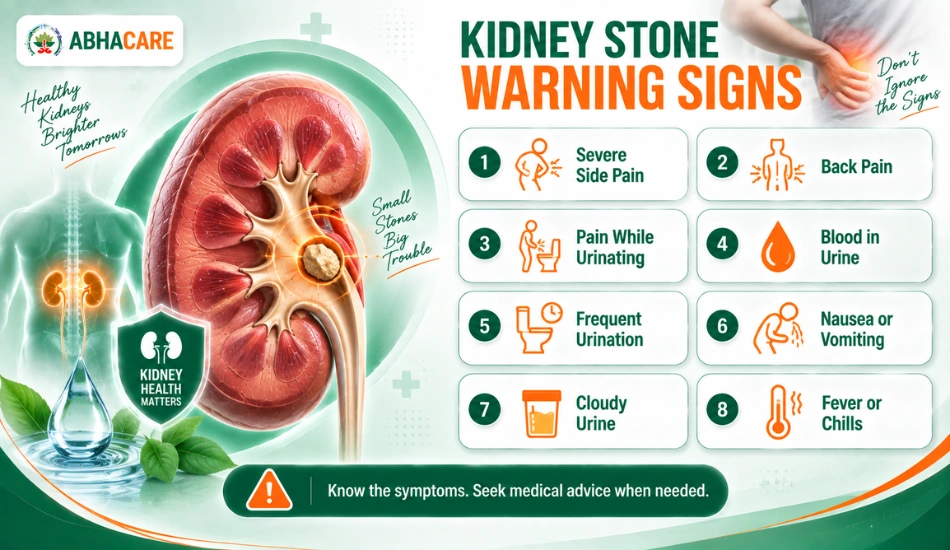
Consult a urologist or nephrologist if you experience:
- Sudden, severe pain in your back or side
- Pain that comes in waves
- Blood in your urine
- Pain or burning during urination
- Nausea or vomiting alongside pain
- A history of recurrent kidney stones
Recurrent stones, in particular, are worth investigating further — a metabolic workup can identify the specific cause and guide a diet plan that's actually tailored to you, rather than generic advice.
Frequently Asked Questions (FAQs)
Can I never eat spinach again if I've had a kidney stone?
▼No — moderation and pairing with calcium-rich foods is usually enough for most people. Complete avoidance is rarely necessary unless your doctor advises otherwise based on your specific stone type.
Is dairy bad for kidney stones?
▼No — this is a common misconception. Dietary calcium, including dairy, actually helps bind oxalate in the gut before it reaches the kidneys. It's calcium supplements taken without food, not dietary calcium, that may be more of a concern.
How much water should I drink to prevent kidney stones?
▼Most guidance suggests enough fluid to produce close to 2.5 liters of urine a day, which for many people means drinking around 3 liters of fluid daily — more in hot weather or with heavy sweating. Your doctor can advise a specific target based on your history.
Do all kidney stones form the same way?
▼No — calcium oxalate, uric acid, and calcium phosphate stones form through different mechanisms, which is why dietary advice can vary depending on which type you're prone to.
Talk to a Kidney Stone Specialist at AbhaCare
If you've had a kidney stone before, or are dealing with symptoms now, getting a proper diagnosis is the first step to a diet plan that actually fits your case. Book a consultation with a urologist to get your stone type confirmed and receive dietary guidance tailored to you.