Introduction
Surgical treatment has advanced significantly over the years. Today, patients often have two main options: laparoscopic surgery and traditional open surgery. Many people prefer minimally invasive procedures because they offer faster recovery and less discomfort. Understanding the benefits of laparoscopic surgery vs open surgery helps patients make informed decisions. With expert guidance and coordination from AbhaCare, patients can choose the most suitable surgical approach for their condition.
Table of Contents
1. Introduction to Laparoscopic Surgery vs Open Surgery
2. What Is Laparoscopic Surgery?
3. What Is Open Surgery?
4. Key Differences and Comparison
5. Benefits of Laparoscopic Surgery
6. When Open Surgery Is Required
7. Recovery and Conclusion
What Is Laparoscopic Surgery?
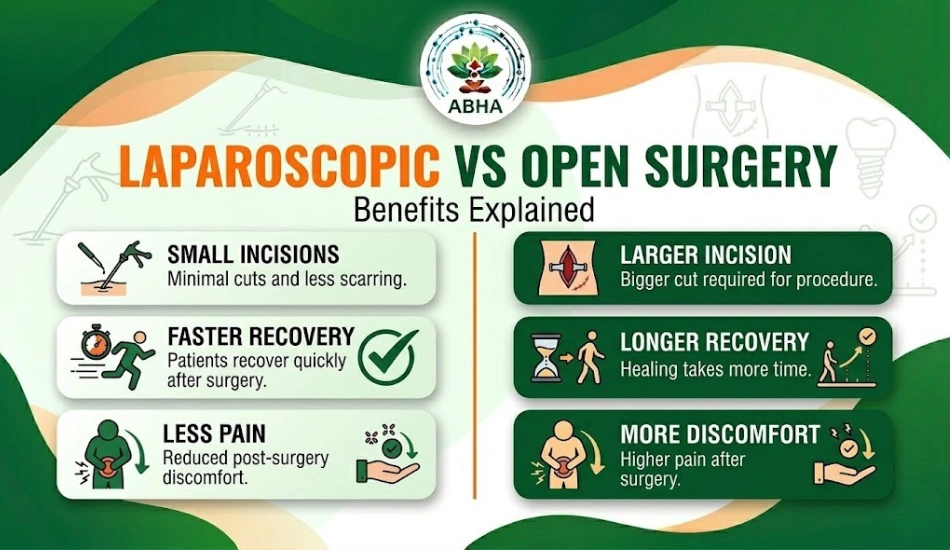
Laparoscopic surgery is a minimally invasive procedure performed using small incisions, a camera, and specialized instruments. The surgeon views the internal organs on a screen and performs the operation with precision. This technique is commonly used for gallbladder surgery, hernia repair, appendix removal, and gynecological procedures.
What Is Open Surgery?
Open surgery is the traditional method where a larger incision is made to access the affected area directly. While still necessary in certain complex cases, it usually involves longer hospital stays and recovery time compared to laparoscopic procedures.
Key Differences Between Laparoscopic and Open Surgery
| Factor | Laparoscopic Surgery | Open Surgery |
|---|---|---|
| Incision Size | Small cuts (0.5–1 cm) | Large incision |
| Pain Level | Less post-operative pain | More pain |
| Recovery Time | Faster recovery | Longer recovery |
| Hospital Stay | Short stay | Extended stay |
| Scarring | Minimal scars | Visible scars |
Benefits of Laparoscopic Surgery
Laparoscopic procedures offer several advantages over traditional open surgery. Many patients prefer this modern technique due to quicker healing and better comfort. Through Abhacare, patients can access experienced surgeons and advanced laparoscopic facilities.
| Benefit | Explanation |
|---|---|
| Minimal Pain | Smaller incisions reduce tissue damage |
| Faster Recovery | Patients return to normal activities quickly |
| Less Blood Loss | Precision instruments minimize bleeding |
| Short Hospital Stay | Often discharged within 24–48 hours |
| Lower Infection Risk | Smaller wounds heal faster |
When Open Surgery May Be Required
Despite the advantages of laparoscopic surgery, open surgery may still be necessary in certain situations. These include severe infections, large tumors, complex anatomy, or emergency cases. Doctors associated with Abhacare carefully evaluate each patient to recommend the safest option.
Common Surgeries Performed Laparoscopically
Gallbladder Removal
Hernia Repair
Appendix Surgery
Gynecological Procedures
Weight Loss Surgery
Recovery Comparison
Patients undergoing laparoscopic surgery usually experience less discomfort and faster discharge. Most return to daily activities within a few days. In contrast, open surgery may require weeks for complete recovery. Proper post-operative care and follow-up support through Abhacare further improve outcomes.
Which Option Is Better?
The choice depends on the medical condition, patient health, and surgeon recommendation. In most cases, laparoscopic surgery is preferred due to its benefits. However, patient safety remains the top priority when deciding between procedures.
Conclusion
Laparoscopic surgery offers significant advantages such as minimal pain, faster recovery, and smaller scars compared to open surgery. However, both techniques have their place depending on the case. With expert consultation and end-to-end support from AbhaCare, patients can choose the right surgical option and experience a smoother treatment journey.