Introduction
Dental implant specialist in Delhi are one of the most effective solutions for replacing missing teeth. However, many patients worry whether they can still get implants if they have bone loss. Jawbone loss is common after tooth extraction, gum disease, or aging. The good news is that even with reduced bone density, dental implants may still be possible. With proper evaluation and expert guidance from Abhacare, patients can explore advanced solutions for successful implant treatment.
Table of Contents
1. Introduction to Dental Implant Treatment
2. What Is Jawbone Loss and Its Causes?
3. Can You Get Dental Implants with Bone Loss?
4. Treatment Options Before Dental Implants
5. Benefits of Bone Reconstruction
6. Diagnosis and Recovery Process
7. Who Is a Good Candidate and Conclusion
What Is Bone Loss in the Jaw?
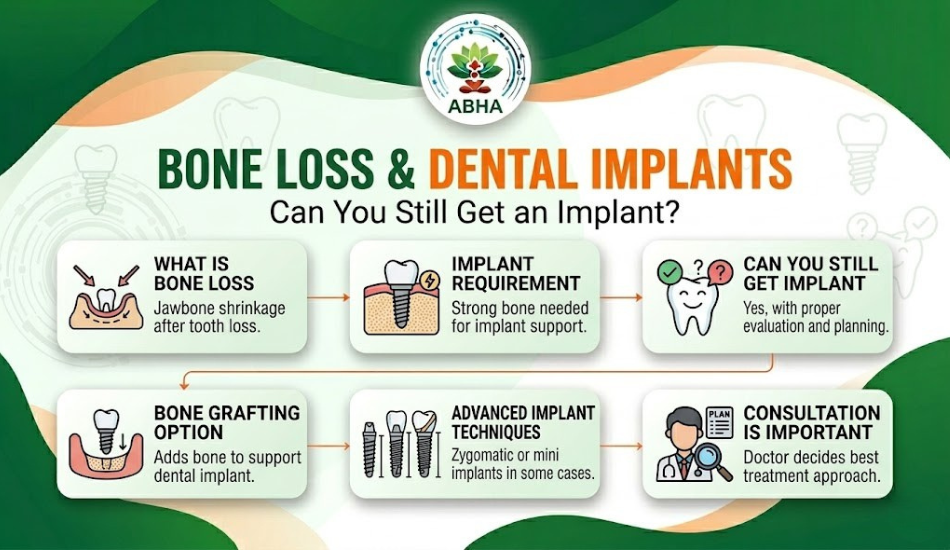
Bone loss occurs when the jawbone shrinks or weakens after a tooth is missing for a long time. The bone requires stimulation from tooth roots, and when a tooth is lost, the bone gradually resorbs. This can affect facial structure and make dental implant placement more challenging.
Common Causes of Jawbone Loss
| Cause | Description |
|---|---|
| Tooth Loss | Missing teeth lead to gradual bone shrinkage |
| Gum Disease | Periodontitis damages bone supporting teeth |
| Injury or Trauma | Accidents affecting jawbone structure |
| Dentures | Long-term denture use may accelerate bone loss |
| Aging | Natural reduction in bone density |
Can You Still Get Dental Implants with Bone Loss?
Yes, patients with bone loss can still get Dental implant specialist in Delhi many cases. Modern dentistry offers several techniques to rebuild or strengthen the jawbone before implant placement. Specialists associated with AbhaCare assess bone quality using digital scans and recommend the most suitable treatment plan.
Treatment Options for Bone Loss Before Implants
| Procedure | Purpose | When Recommended |
|---|---|---|
| Bone Grafting | Adds bone material to weak areas | Moderate bone loss |
| Sinus Lift | Raises sinus floor for upper jaw implants | Upper jaw bone loss |
| Ridge Augmentation | Restores jawbone width | Narrow jawbone |
| Zygomatic Implants | Long implants anchored in cheekbone | Severe bone loss |
Benefits of Bone Reconstruction Before Implant
Rebuilding the jawbone improves implant stability and long-term success. It also helps restore facial structure, improves chewing ability, and ensures better aesthetic results. Advanced treatment planning through Abhacare helps patients receive personalized care and optimal outcomes.
How Is Bone Loss Diagnosed?
Dentists use digital X-rays or 3D CBCT scans to measure bone density and volume. These imaging techniques help determine whether implants can be placed immediately or if bone grafting is required first. Proper diagnosis ensures safe and predictable results.
Recovery After Bone Grafting
Recovery time varies depending on the procedure. Most patients heal within a few weeks, but full bone integration may take 3–6 months before implant placement. Patients may experience mild swelling or discomfort, which usually resolves quickly.
Who Is a Good Candidate for Dental Implants?
Even with bone loss, patients may qualify for implants if they have good overall health and controlled medical conditions. Non-smokers and individuals with good oral hygiene generally experience better outcomes. Consultation with experts through Abhacare helps determine eligibility.
Conclusion
Bone loss does not automatically mean you cannot get dental implants. Modern procedures like bone grafting and sinus lift make implant treatment possible for many patients. Early consultation and proper planning are important for success. With expert evaluation and end-to-end support from AbhaCare, patients can restore their smile and enjoy long-lasting dental implant results.