Introduction
Dental braces are commonly used to straighten teeth, but many patients also wonder whether braces can fix jaw alignment. Jaw misalignment can cause problems like difficulty chewing, speech issues, facial imbalance, and even headaches. Modern orthodontic treatment in 2026 focuses not only on improving smile aesthetics but also correcting functional issues. With expert consultation and guidance from Abhacare, patients can understand whether braces are the right solution for their jaw alignment concerns.
Table of Contents
1. Introduction to Dental Braces
2. What Is Jaw Alignment Problem?
3. Can Dental Braces Fix Jaw Alignment?
4. Types of Jaw Alignment Problems Treated with Braces
5. Treatment Options for Jaw Alignment
6. Benefits of Correcting Jaw Alignment
7. When Braces Are Not Enough & Conclusion
What Is Jaw Alignment Problem?
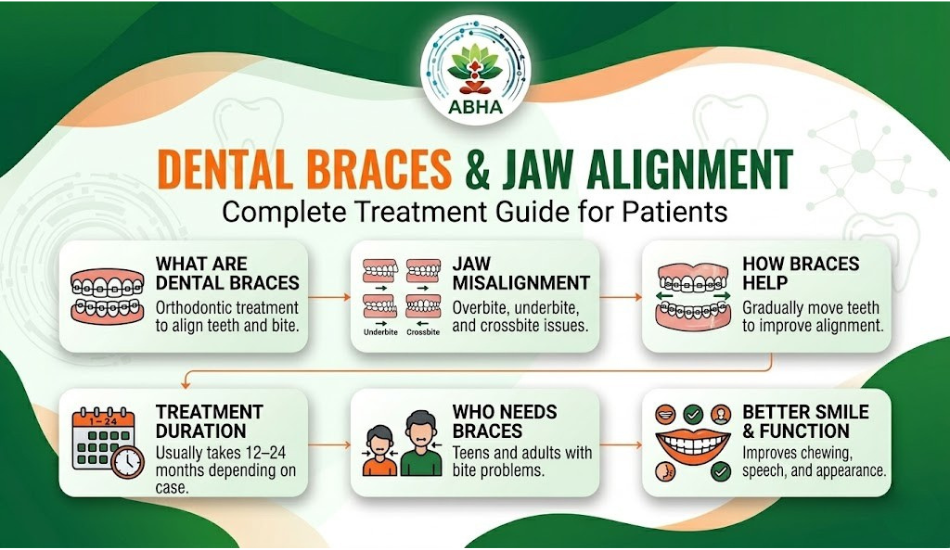
Jaw alignment problems occur when the upper and lower jaws do not meet properly. This condition is also known as malocclusion. It can affect both appearance and oral health. Common types include overbite, underbite, crossbite, and open bite. These issues can lead to uneven tooth wear, gum problems, and difficulty in speaking or chewing.
Can Dental Braces Fix Jaw Alignment?
Yes, dental braces can help correct mild to moderate jaw alignment problems. Braces gradually move teeth into the correct position and guide jaw development, especially in younger patients. However, severe jaw misalignment may require a combination of orthodontic treatment and jaw surgery. Specialists associated with AbhaCare evaluate each case carefully to recommend the best treatment plan.
Types of Jaw Alignment Problems Treated with Braces
| Condition | Description | Can Braces Help? |
|---|---|---|
| Overbite | Upper teeth overlap lower teeth | Yes, commonly corrected |
| Underbite | Lower jaw protrudes forward | Mild cases treatable |
| Crossbite | Upper and lower teeth misaligned sideways | Yes, effective treatment |
| Open Bite | Front teeth do not touch | Braces can correct |
How Braces Correct Jaw Alignment
Dental braces apply gentle, continuous pressure to move teeth gradually. Over time, this movement helps improve bite alignment and jaw positioning. Orthodontists may also use additional appliances like elastics, expanders, or aligners to guide jaw correction. Treatment duration typically ranges from 12 to 24 months depending on severity.
Treatment Options for Jaw Alignment
Different orthodontic solutions are available based on patient needs:
Metal Braces – Traditional and highly effective option.
Ceramic Braces – Less visible and more aesthetic.
Clear Aligners – Removable and comfortable option.
Functional Appliances – Used for jaw growth correction in children.
Benefits of Correcting Jaw Alignment
| Benefit | Impact |
|---|---|
| Improved Chewing | Better digestion and comfort |
| Enhanced Smile | Boosts confidence |
| Reduced Jaw Pain | Less strain on jaw muscles |
| Better Speech | Clear pronunciation |
| Improved Oral Health | Reduced risk of gum disease |
When Braces Alone Are Not Enough
In severe cases where jaw bones are significantly misaligned, braces alone may not fully correct the problem. Orthognathic (jaw) surgery may be recommended along with braces. Doctors connected with Abhacare provide detailed evaluation and guide patients on whether combined treatment is necessary.
Who Is the Ideal Candidate?
Children and teenagers respond best to braces because their jaw bones are still developing. However, adults can also benefit from orthodontic treatment. Early consultation helps in planning effective treatment and avoiding complications.
Recovery and Care During Treatment
During braces treatment, maintaining oral hygiene is important. Patients should brush properly, avoid hard or sticky foods, and attend regular follow-up visits. Minor discomfort is normal initially but usually subsides within a few days.
Conclusion
Dental braces can effectively fix many jaw alignment problems, improving both function and appearance. The right treatment depends on severity, age, and individual condition. With proper diagnosis and expert guidance from Abhacare, patients can choose the best orthodontic solution and achieve long-term oral health benefits.