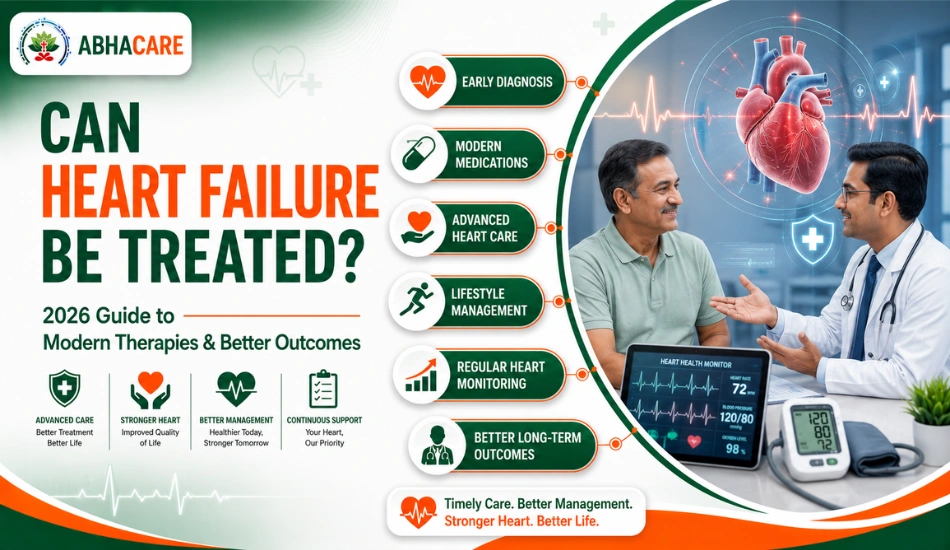
Can Heart Failure Be Treated? Complete Guide to Diagnosis, Therapy aur 2026 Ke Naye Options
Yes, heart failure can be treated and effectively managed, even though it's usually a long-term condition rather than a curable one. Modern guideline-directed medical therapy (GDMT) - a combination of four drug classes - reduces hospitalizations and extends survival for most patients. In 2026, newer options like non-steroidal mineralocorticoid receptor antagonists (MRAs) and GLP-1 therapies have expanded treatment further, especially for previously hard-to-treat forms of the condition.
Agar aap ya aapka koi close family member heart failure ke symptoms se guzar raha hai, to samay rehte experienced specialist se Best Heart Failure Treatment in Delhi lena aapki quality of life aur long-term survival dono ko significantly improve kar sakta hai. Is guide mein hum detail mein samjhenge ki heart failure kya hai, iska sabse effective treatment kya hai, aur 2026 mein kaunse naye advancements aaye hain.
Table of Contents
- What Is Heart Failure?
- What Is the Most Effective Treatment Right Now?
- What's New in Heart Failure Treatment in 2026?
- Can Heart Failure Be Reversed or Cured?
- What Treatments Exist Beyond Medication?
- When Should You See a Doctor?
- Frequently Asked Questions (FAQs)
- Conclusion
What Is Heart Failure?
Heart failure means the heart can't pump or fill with blood as efficiently as it should - it does not mean the heart has stopped. It's classified by ejection fraction: HFrEF (reduced), HFmrEF (mildly reduced), and HFpEF (preserved). Common causes include coronary artery disease, uncontrolled high blood pressure, diabetes, valve disease, and prior heart attacks.
What Is the Most Effective Treatment for Heart Failure Right Now?
The most effective approach for HFrEF combines four drug classes together, known as the "four pillars" of therapy:
- ARNI / ACE inhibitor / ARB - reduces strain on the heart
- Beta-blockers - slow heart rate, reduce workload
- Mineralocorticoid receptor antagonists (MRAs) - reduce fluid buildup and fibrosis
- SGLT2 inhibitors - lower hospitalization risk across ejection fraction types
Real-world evidence backs this up: a large German insurance-claims study compared this newer four-drug combination against older two-drug therapy in patients with reduced ejection fraction to measure effects on mortality and hospital readmission. Patients on all four therapies consistently do better than those on one or two alone.
What's New in Heart Failure Treatment in 2026?
2026 has brought the biggest expansion of HF treatment options in years, particularly for patients who previously had limited choices.
Non-steroidal MRAs and metabolic therapies.
A major 2026 development is the emergence of non-steroidal mineralocorticoid receptor antagonists and incretin-based therapies for heart failure with mildly reduced and preserved ejection fraction - a group that historically lacked strong treatment options.
GLP-1 drugs entering HF care.
GLP-1 receptor agonists are emerging as heart failure therapies, particularly for obesity-related HFpEF, working through effects on weight, inflammation, and cardiometabolic stress.
Safer next-generation MRAs.
These newer therapies may reduce fibrosis and adverse cardiac remodeling while lowering the risk of high potassium levels that limited broader use of older MRA drugs, a real benefit for older patients with kidney issues.
Less invasive device options.
Care for valve disease contributing to heart failure has advanced with transcatheter edge-to-edge repair techniques, avoiding open-heart surgery for eligible patients.
A shift toward personalized care.
Clinical practice in 2026 is moving beyond simplified classifications and treatment algorithms toward approaches that better reflect biological differences, other health conditions, and patient-centered outcomes. Delhi ke advanced cardiac centers mein ab ye personalized approach follow ki ja rahi hai, jisse patients ko unki specific condition ke hisaab se best possible Best Heart Failure Treatment in Delhi mil sakta hai.
Can Heart Failure Be Reversed or Cured?
Usually not cured, but in specific reversible cases - such as heart failure triggered by an uncontrolled arrhythmia, alcohol-related cardiomyopathy, or postpartum cardiomyopathy - heart function can improve substantially, sometimes close to normal, once the underlying cause is treated. For most patients with structural or long-standing causes, treatment focuses on long-term control rather than reversal.
What Treatments Exist Beyond Medication?
- Sodium and fluid monitoring to prevent fluid overload
- Daily weight checks as an early warning sign of fluid buildup
- Cardiac rehabilitation to rebuild exercise tolerance safely
- Implantable devices (ICDs, CRT) for patients at risk of dangerous arrhythmias
- Left ventricular assist devices (LVADs) for advanced pump dysfunction
- Heart transplant as a last-resort option for end-stage heart failure
When Should You See a Doctor for Possible Heart Failure?
See a doctor promptly if you notice shortness of breath during activity or while lying flat, swelling in the legs or abdomen, persistent fatigue, a rapid or irregular heartbeat, or sudden unexplained weight gain from fluid retention. Earlier diagnosis allows treatment to start before significant heart damage occurs.
Agar aapko ye symptoms mehsoos ho rahe hain, to delay kiye bina ek experienced cardiologist se Best Heart Failure Treatment in Delhi ke liye consultation lein - early diagnosis se treatment options aur outcomes dono better hote hain.
Q1. Can heart failure be cured completely?
Usually not, but it can be effectively controlled long-term. Some reversible causes allow heart function to return close to normal once treated.
Q2. What is the newest heart failure treatment in 2026?
Non-steroidal MRAs and GLP-1 receptor agonists are the newest additions, particularly benefiting patients with mildly reduced or preserved ejection fraction.
Q3. Can lifestyle changes alone treat heart failure?
No. Lifestyle changes support treatment but don't replace guideline-directed medication.
Q4. How long can someone live with treated heart failure?
Outcomes vary by cause and stage, but modern GDMT has meaningfully improved survival and quality of life compared to a decade ago.
Conclusion
Heart failure ek serious lekin manageable condition hai. Modern guideline-directed medical therapy, saath mein 2026 ke naye advancements jaise non-steroidal MRAs, GLP-1 therapies aur less invasive device options ki wajah se patients ab pehle ke comparison mein kaafi better outcomes achieve kar rahe hain.
Agar aap ya aapke parivaar mein koi heart failure ke symptoms face kar raha hai, to bina delay kiye ek trusted Best Heart Failure Treatment in Delhi ke liye experienced cardiologist se consultation lein. Timely diagnosis aur sahi treatment plan se long-term heart health aur quality of life dono ko significantly improve kiya ja sakta hai.