Cataract Surgery in Delhi: Procedure, Benefits and Recovery
Cataracts are one of the leading causes of vision impairment worldwide, especially among older adults. As the eye's natural lens becomes cloudy over time, daily activities such as reading, driving, watching television, and recognizing faces can become increasingly difficult. Fortunately, modern cataract surgery is one of the safest and most successful medical procedures available today.
If you are searching for Cataract Surgery in Delhi, understanding the procedure, benefits, recovery process, and treatment options can help you make an informed decision about your eye health. With advanced surgical technologies, experienced ophthalmologists, and premium eye care facilities, Delhi has become a preferred destination for cataract treatment.
Table of Contents
1. What Is a Cataract?
2. Common Symptoms of Cataracts
3. Causes and Risk Factors
4. When Is Cataract Surgery Required?
5. Cataract Surgery in Delhi: Step-by-Step Procedure
6. Types of Cataract Surgery
7. Types of Intraocular Lenses (IOLs)
8. Benefits of Cataract Surgery
9. Recovery After Cataract Surgery
10. Recovery Timeline
11. Precautions After Cataract Surgery
12. Cataract Surgery Cost in Delhi
13. How to Choose the Best Cataract Surgeon
14. Frequently Asked Questions
15. Conclusion
What Is a Cataract?
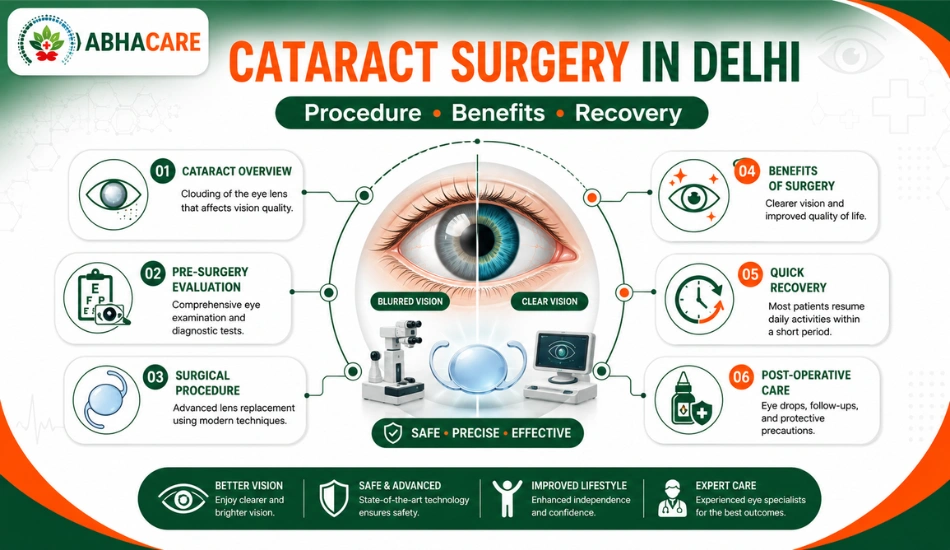
A cataract occurs when the natural lens of the eye becomes cloudy, preventing light from passing clearly to the retina. This clouding develops gradually and may affect one or both eyes. Cataracts are most commonly associated with aging, but they can also develop due to injury, diabetes, prolonged steroid use, or certain medical conditions.
The lens normally works like a camera lens, focusing light to produce clear vision. When a cataract forms, vision becomes blurred, dull, or distorted.
| Normal Lens | Cataract Lens |
|---|---|
| Clear and transparent | Cloudy and opaque |
| Sharp vision | Blurred vision |
| Normal light transmission | Reduced light transmission |
| Good color perception | Faded colors |
Common Symptoms of Cataracts
Cataracts typically develop slowly. Early symptoms may be mild, but they become more noticeable as the condition progresses.
Blurred or cloudy vision
Difficulty seeing at night
Sensitivity to bright lights
Halos around lights
Frequent changes in eyeglass prescription
Double vision in one eye
Fading or yellowing of colors
Difficulty reading small print
Causes and Risk Factors
Although aging is the most common cause of cataracts, several factors can increase the risk of developing them earlier.
| Risk Factor | Impact |
|---|---|
| Age Above 60 | Most common cause |
| Diabetes | Accelerates cataract formation |
| Smoking | Increases oxidative damage |
| Excessive Sun Exposure | UV radiation affects the lens |
| Eye Injury | May cause traumatic cataracts |
| Long-Term Steroid Use | Raises cataract risk |
| Family History | Genetic predisposition |
When Is Cataract Surgery Required?
Cataract surgery is usually recommended when vision problems begin interfering with daily activities. Contrary to a common myth, patients do not need to wait for cataracts to become "mature" before surgery.
You may need surgery if:
- Reading becomes difficult
- Driving is unsafe due to poor vision
- Glare affects daily activities
- Vision loss impacts work performance
- Frequent prescription changes no longer improve vision
- Cataracts affect quality of life
Cataract Surgery in Delhi: Step-by-Step Procedure
Modern cataract surgery is a minimally invasive day-care procedure that usually takes 15–30 minutes.
| Step | Procedure Details |
|---|---|
| Eye Examination | Detailed eye assessment and lens measurements |
| Anesthesia | Eye drops used to numb the eye |
| Micro Incision | Small opening created in the cornea |
| Cataract Removal | Cloudy lens broken and removed |
| IOL Implantation | Artificial lens inserted |
| Recovery | Patient discharged same day |
Types of Cataract Surgery
| Surgery Type | Description |
|---|---|
| Phacoemulsification | Most common modern technique using ultrasound |
| Laser-Assisted Cataract Surgery | Advanced laser-guided procedure |
| Extracapsular Surgery | Used in certain advanced cataract cases |
Phacoemulsification remains the most widely performed cataract procedure in Delhi due to its high success rate and rapid recovery.
Types of Intraocular Lenses (IOLs)
During cataract surgery, the cloudy lens is replaced with an artificial lens called an intraocular lens (IOL).
| Lens Type | Features |
|---|---|
| Monofocal Lens | Clear vision at one distance |
| Multifocal Lens | Improves near and distance vision |
| Toric Lens | Corrects astigmatism |
| Premium IOL | Advanced visual performance |
Benefits of Cataract Surgery
Cataract surgery offers significant improvements in vision and quality of life.
| Benefit | Impact |
|---|---|
| Clearer Vision | Improved daily activities |
| Better Night Vision | Safer driving |
| Improved Color Perception | Brighter and more vivid colors |
| Reduced Glare | Comfort in bright environments |
| Enhanced Independence | Improved quality of life |
Recovery After Cataract Surgery
Most patients experience significant visual improvement within a few days. Full healing usually occurs within a few weeks.
Mild discomfort for 1–2 days
Temporary blurry vision initially
Gradual improvement in clarity
Minimal pain in most cases
Quick return to normal activities
Recovery Timeline
| Recovery Stage | Expected Progress |
|---|---|
| 24 Hours | Initial healing begins |
| 1 Week | Vision noticeably improves |
| 2 Weeks | Most routine activities resume |
| 4–6 Weeks | Complete healing achieved |
Precautions After Cataract Surgery
Avoid rubbing the eye
Use prescribed eye drops regularly
Wear protective sunglasses outdoors
Avoid swimming during recovery
Do not lift heavy objects initially
Keep water away from the eye while bathing
Attend follow-up appointments
Cataract Surgery Cost in Delhi
The cost of Cataract Surgery in Delhi varies based on the hospital, surgeon, technology used, and lens selected.
| Treatment Type | Estimated Cost Range |
|---|---|
| Basic Cataract Surgery | ₹15,000 – ₹35,000 |
| Phaco Cataract Surgery | ₹25,000 – ₹70,000 |
| Premium Lens Cataract Surgery | ₹50,000 – ₹1,50,000+ |
| Laser Cataract Surgery | ₹60,000 – ₹2,00,000+ |
How to Choose the Best Cataract Surgeon in Delhi
When selecting a cataract specialist, consider:
- Experience in cataract surgery
- Number of surgeries performed
- Availability of modern technology
- Hospital infrastructure
- Patient reviews and outcomes
- Lens options offered
- Post-surgery support and follow-up care
Conclusion
Cataract Surgery in Delhi offers an effective and long-lasting solution for restoring clear vision and improving quality of life. With modern surgical techniques, advanced intraocular lenses, and experienced eye specialists, patients can achieve excellent visual outcomes with minimal downtime. Early diagnosis and timely treatment help prevent further vision loss and ensure better long-term eye health. If cataracts are affecting your daily activities, consulting an experienced ophthalmologist can help determine the best treatment approach for your needs.