What Is Cataract?
A Laser Cataract Surgery is a common eye condition in which the natural lens of the eye becomes cloudy, leading to blurred or reduced vision. This usually develops slowly and can affect one or both eyes. Cataracts are more common with aging, but they can also occur due to diabetes, injury, prolonged screen exposure, or certain medications. With early diagnosis and proper guidance from AbhaCare, cataracts can be treated safely and effectively.
Table of Contents
1. What Is Cataract Surgery?
2. Early Symptoms of Cataract
3. Common Causes of Cataract
4. When Do You Need Cataract Surgery?
5. Types of Cataract Surgery
6. Benefits of Early Cataract Treatment
7. Recovery, Risk Factors and Conclusion
Early Symptoms of Cataract
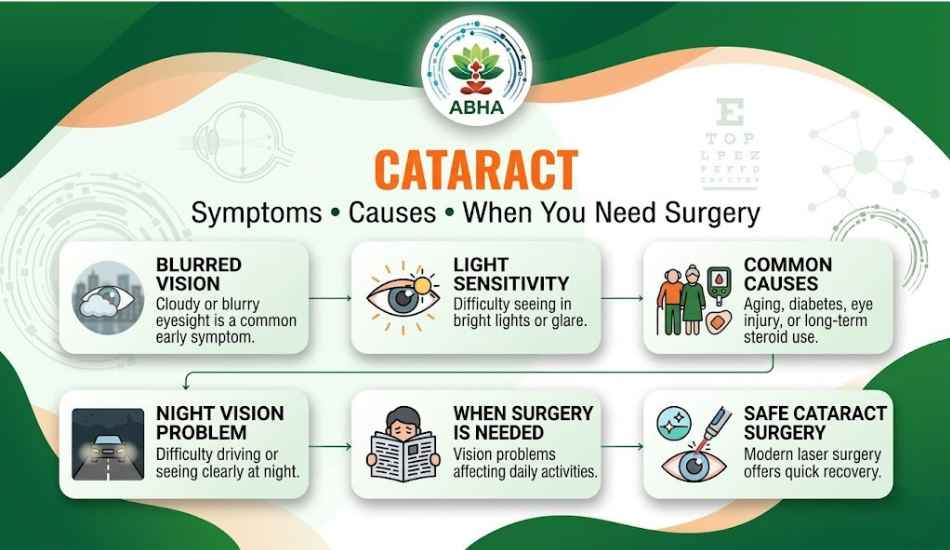
Cataract symptoms usually appear gradually, and many patients ignore early warning signs. Recognizing these symptoms early can help prevent vision complications.
| Symptom | Description |
|---|---|
| Blurred Vision | Vision becomes cloudy or foggy |
| Difficulty at Night | Problems seeing in low-light conditions |
| Sensitivity to Light | Glare from headlights or sunlight |
| Double Vision | Seeing multiple images in one eye |
| Frequent Glasses Change | Prescription changes often |
| Faded Colors | Colors appear dull or yellowish |
Common Causes of Cataract
Several factors can increase the risk of cataract development. Understanding these causes helps in prevention and timely treatment.
| Cause | Risk Factor |
|---|---|
| Aging | Most common cause after age 50 |
| Diabetes | High sugar levels damage eye lens |
| UV Exposure | Long-term sunlight exposure |
| Smoking | Increases oxidative stress in eyes |
| Eye Injury | Trauma can lead to cataract formation |
| Long-Term Steroids | Certain medications increase risk |
When Do You Need Cataract Surgery?
cataract surgery is recommended when vision problems start affecting daily activities such as reading, driving, watching TV, or working. Surgery becomes necessary when glasses no longer improve vision. Modern cataract surgery is safe, quick, and usually completed within 15–20 minutes.
With guidance from Abhacare, patients can consult experienced eye specialists who determine the right time for surgery and recommend the best lens options.
Types of Cataract Surgery
Advanced techniques ensure faster recovery and better vision outcomes. The most commonly used methods include:
Phacoemulsification – Small incision surgery using ultrasound technology.
Laser Cataract Surgery – Highly precise and advanced procedure.
Small Incision Cataract Surgery (SICS) – Cost-effective option for selected patients.
Benefits of Early Cataract Treatment
Early cataract treatment helps prevent vision loss and improves quality of life. Patients experience clearer vision, reduced glare, and improved daily functioning. With modern techniques and expert care provided through AbhaCare, recovery is quick and complications are minimal.
Recovery After Cataract Surgery
Recovery after cataract surgery is usually fast. Most patients notice improved vision within a few days. Doctors may recommend eye drops, avoiding heavy lifting, and protecting eyes from dust. Regular follow-ups ensure smooth healing and optimal results.
Who Is at Higher Risk?
People above 50 years, diabetics, smokers, and individuals with prolonged screen exposure are at higher risk. Regular eye check-ups are important for early detection. Abhacare helps patients schedule consultations and connect with trusted eye specialists for proper evaluation.
Conclusion
Cataract is a common but treatable eye condition. Recognizing early symptoms and seeking timely treatment can prevent vision problems. Modern cataract surgery is safe, effective, and offers quick recovery. With expert consultation and end-to-end support from AbhaCare, patients can experience a smooth and hassle-free treatment journey and regain clear vision.