15 Common Monsoon Diseases: Causes, Symptoms, Treatment aur Prevention Guide
The rainy season brings welcome relief from the summer heat, but it also creates the perfect environment for bacteria, viruses, fungi, and mosquitoes to multiply. Waterlogging, high humidity, contaminated drinking water, poor sanitation, and stagnant water significantly increase the risk of infectious diseases during monsoon. Health experts consistently report a seasonal rise in mosquito-borne, water-borne, food-borne, respiratory, and skin infections during this period, making preventive care especially important.
Whether you're an adult, child, senior citizen, or someone with diabetes or a weakened immune system, understanding common monsoon diseases can help you recognize symptoms early and reduce the risk of serious complications.
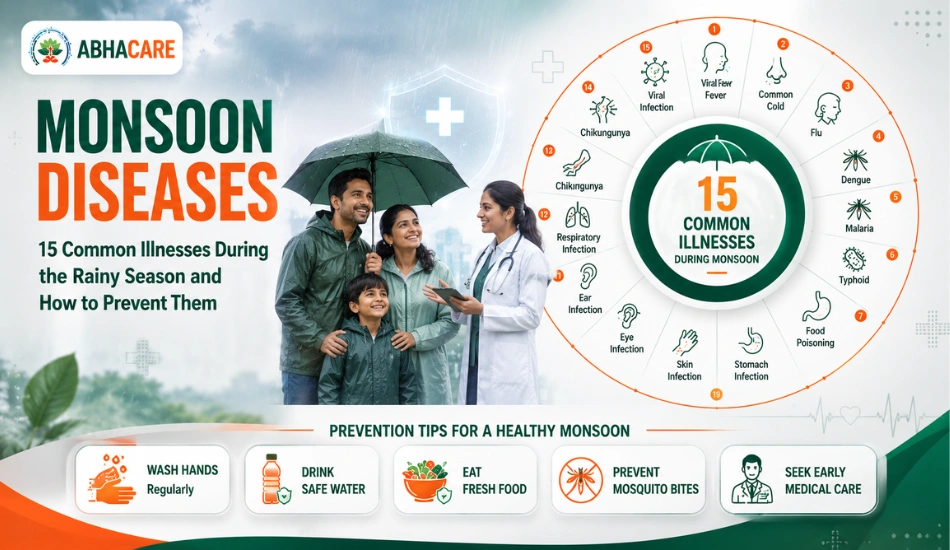
This comprehensive guide covers the 15 most common monsoon illnesses, their causes, symptoms, treatment options, and practical prevention tips to help you and your family stay healthy throughout the rainy season.
Table of Contents
- Why Do Diseases Increase During the Monsoon?
- 15 Common Monsoon Diseases
- Quick Comparison Table
- People at Higher Risk
- Monsoon Prevention Checklist
- Foods That Boost Immunity During Monsoon
- When Should You Visit a Doctor?
- Frequently Asked Questions
- Conclusion
Why Do Diseases Increase During the Monsoon?
The rainy season creates favorable conditions for disease-causing organisms.
Some major reasons include:
- Stagnant water becomes a breeding ground for mosquitoes.
- Floodwater contaminates drinking water.
- Humidity promotes bacterial and fungal growth.
- Food spoils faster.
- Poor sanitation increases infection spread.
- Reduced sunlight and damp environments encourage mold and respiratory problems.
- Increased indoor crowding allows viral infections to spread more easily.
15 Common Monsoon Diseases
1. Dengue Fever
Dengue is one of the most common mosquito-borne diseases during the rainy season. It spreads through the bite of infected Aedes mosquitoes, which breed in clean stagnant water.
Symptoms
- High fever
- Severe headache
- Pain behind the eyes
- Joint pain
- Muscle pain
- Skin rash
- Low platelet count
- Fatigue
Prevention
- Remove stagnant water around your home.
- Use mosquito repellents.
- Wear full-sleeved clothes.
- Install window screens.
- Sleep under mosquito nets if needed.
2. Malaria
Malaria is transmitted by infected Anopheles mosquitoes and remains a major concern during monsoon.
Symptoms
- High fever with chills
- Excessive sweating
- Vomiting
- Body ache
- Weakness
- Headache
Prevention
- Prevent mosquito breeding.
- Use insecticide sprays.
- Apply mosquito repellent.
- Avoid water accumulation.
3. Chikungunya
Chikungunya spreads through mosquito bites and causes severe joint pain.
Symptoms
- Fever
- Joint pain
- Swollen joints
- Fatigue
- Headache
- Skin rash
Prevention
The preventive measures are similar to dengue because both diseases are spread by mosquitoes.
4. Typhoid
Typhoid is caused by contaminated food and drinking water.
Symptoms
- Persistent fever
- Weakness
- Abdominal pain
- Constipation or diarrhea
- Loss of appetite
Prevention
- Drink boiled or filtered water.
- Wash fruits and vegetables thoroughly.
- Avoid roadside food during monsoon.
- Wash hands before meals.
5. Cholera
Cholera spreads rapidly through contaminated water and can lead to severe dehydration if not treated promptly.
Symptoms
- Watery diarrhea
- Vomiting
- Muscle cramps
- Extreme dehydration
- Weak pulse
Prevention
- Drink safe water.
- Maintain food hygiene.
- Practice proper handwashing.
- Seek immediate medical care if severe diarrhea occurs.
6. Viral Fever
Viral infections become extremely common during rainy weather.
Symptoms
- Fever
- Body pain
- Sore throat
- Cough
- Headache
- Fatigue
Prevention
- Maintain personal hygiene.
- Stay hydrated.
- Avoid close contact with infected individuals.
- Get adequate sleep.
7. Common Cold and Flu
Humidity and sudden weather changes increase respiratory infections.
Symptoms
- Sneezing
- Runny nose
- Cough
- Mild fever
- Sore throat
Prevention
- Wash hands frequently.
- Avoid sharing personal items.
- Eat nutritious foods.
- Stay warm after getting wet.
8. Food Poisoning
Food contamination increases during monsoon due to moisture and improper storage.
Symptoms
- Vomiting
- Diarrhea
- Stomach cramps
- Fever
- Dehydration
Prevention
- Eat freshly prepared meals.
- Avoid stale food.
- Refrigerate leftovers properly.
- Maintain kitchen hygiene.
9. Acute Gastroenteritis
Gastroenteritis affects the stomach and intestines.
Symptoms
- Loose motions
- Vomiting
- Abdominal pain
- Fever
- Weakness
Prevention
- Drink purified water.
- Wash hands regularly.
- Avoid unhygienic food.
10. Hepatitis A
Hepatitis A spreads through contaminated food and water.
Symptoms
- Yellow eyes
- Yellow skin
- Dark urine
- Fever
- Nausea
- Loss of appetite
Prevention
- Consume safe drinking water.
- Maintain food hygiene.
- Wash hands properly.
11. Leptospirosis
This bacterial infection spreads through water contaminated with animal urine, especially after flooding.
Symptoms
- High fever
- Muscle pain
- Red eyes
- Headache
- Vomiting
Prevention
- Avoid walking barefoot in floodwater.
- Wear waterproof footwear.
- Clean wounds immediately after exposure.
12. Fungal Skin Infections
Humidity encourages fungal growth on the skin, especially in skin folds and feet.
Symptoms
- Itching
- Redness
- Circular rashes
- Peeling skin
- Burning sensation
Prevention
- Keep skin dry.
- Wear breathable cotton clothing.
- Change wet clothes immediately.
- Dry shoes completely before reuse.
13. Conjunctivitis (Pink Eye)
Eye infections become more frequent during the rainy season.
Symptoms
- Red eyes
- Watery discharge
- Eye irritation
- Swelling
Prevention
- Avoid touching your eyes.
- Wash hands frequently.
- Do not share towels.
14. Asthma and Allergies
Humidity, mold, and dust can worsen respiratory conditions.
Symptoms
- Wheezing
- Breathlessness
- Persistent cough
- Chest tightness
Prevention
- Keep indoor spaces dry.
- Reduce mold growth.
- Use prescribed inhalers.
- Maintain good ventilation.
15. Hand, Foot and Mouth Disease (HFMD)
HFMD is common among young children during seasonal changes.
Symptoms
- Fever
- Mouth ulcers
- Skin rash
- Poor appetite
Prevention
- Encourage frequent handwashing.
- Clean toys regularly.
- Keep infected children at home until recovery.
Quick Comparison Table
| Disease | Main Cause | Early Symptoms | Prevention |
|---|---|---|---|
| Dengue | Mosquito | High fever | Mosquito control |
| Malaria | Mosquito | Fever with chills | Avoid mosquito bites |
| Chikungunya | Mosquito | Severe joint pain | Mosquito protection |
| Typhoid | Contaminated food/water | Fever | Safe drinking water |
| Cholera | Contaminated water | Watery diarrhea | Food hygiene |
| Viral Fever | Virus | Fever | Hygiene |
| Cold & Flu | Virus | Sneezing | Hand hygiene |
| Food Poisoning | Contaminated food | Vomiting | Fresh food |
| Gastroenteritis | Infection | Loose motions | Clean water |
| Hepatitis A | Contaminated food/water | Jaundice | Hygiene |
| Leptospirosis | Floodwater | Fever | Waterproof footwear |
| Fungal Infection | Humidity | Itching | Keep skin dry |
| Conjunctivitis | Virus/Bacteria | Red eyes | Hand hygiene |
| Asthma | Allergens | Wheezing | Indoor cleanliness |
| HFMD | Virus | Mouth ulcers | Personal hygiene |
Who Is at Higher Risk?
Certain groups are more likely to develop severe complications from monsoon illnesses.
These include:
- Children below 5 years
- Older adults
- Pregnant women
- People with diabetes
- Individuals with heart disease
- Patients with kidney disease
- People with weakened immunity
These individuals should seek medical advice promptly if symptoms develop.
Monsoon Prevention Checklist
Protecting yourself during the rainy season doesn't require complicated measures. Simple daily habits can significantly reduce the risk of infection.
- Drink boiled or filtered water
- Wash hands with soap frequently
- Eat freshly cooked food
- Avoid roadside food during heavy rains
- Remove stagnant water near your home
- Use mosquito repellents
- Wear clean and dry clothes
- Keep your surroundings clean
- Wash fruits and vegetables properly
- Maintain proper bathroom hygiene
- Sleep adequately
- Stay physically active
- Strengthen immunity with a balanced diet
Foods That Help Strengthen Immunity During Monsoon
Nutrition plays an important role in preventing seasonal infections.
Include:
- Citrus fruits
- Papaya
- Pomegranate
- Fresh vegetables
- Turmeric
- Ginger
- Garlic
- Yogurt
- Lentils
- Eggs
- Nuts
- Adequate water
Limit:
- Uncovered street food
- Raw salads from unhygienic places
- Sugary beverages
- Excess fried food
- Contaminated water and ice
When Should You Visit a Doctor?
Do not ignore symptoms such as:
- Fever lasting more than two days
- Difficulty breathing
- Persistent vomiting
- Severe dehydration
- Blood in stool
- Severe abdominal pain
- Confusion
- Continuous high fever
- Yellowing of the eyes
- Reduced urine output
Early diagnosis and treatment can help prevent serious complications.
If you experience persistent fever, severe dehydration, chest pain, breathing difficulty, or any worsening symptoms during the rainy season, book a consultation in Delhi with a qualified healthcare professional for timely evaluation and treatment.
Frequently Asked Questions (FAQs)
Q1. Which disease is most common during the monsoon?
▼Dengue, malaria, viral fever, typhoid, diarrhea, fungal infections, and food poisoning are among the most commonly reported monsoon illnesses.
Q2. Why do diseases spread more during the rainy season?
▼Stagnant water, increased humidity, contaminated food and water, and mosquito breeding create ideal conditions for infections to spread.
Q3. How can I prevent monsoon diseases naturally?
▼Maintain personal hygiene, drink safe water, eat freshly cooked food, avoid mosquito bites, and keep your surroundings clean.
Q4. Are children more vulnerable to monsoon diseases?
▼Yes. Children have developing immune systems and are more susceptible to mosquito-borne, water-borne, and respiratory infections.
Q5. Which foods should be avoided during monsoon?
▼Avoid stale food, uncovered street food, contaminated water, raw foods from unhygienic sources, and improperly stored leftovers.
Q6. When should I seek medical attention?
▼Seek immediate medical care if you have persistent high fever, severe dehydration, breathing difficulty, blood in stool, severe weakness, or symptoms that worsen despite home care.
Conclusion
The monsoon season is beautiful, but it also brings an increased risk of infectious diseases. Understanding the 15 common illnesses during the rainy season and following simple preventive measures can greatly reduce your chances of falling sick. Safe drinking water, proper food hygiene, mosquito control, clean surroundings, and timely medical attention remain the most effective ways to protect yourself and your family. Staying informed and acting early can make the difference between a mild illness and a serious health complication.
If you or a family member develops symptoms such as persistent fever, severe diarrhea, breathing problems, or signs of dehydration, don't delay seeking medical care. For expert evaluation and personalized treatment, you can book a consultation in Delhi with an experienced healthcare provider.