Kidney Stone Symptoms: 8 Warning Signs You Should Never Ignore – AbhaCare
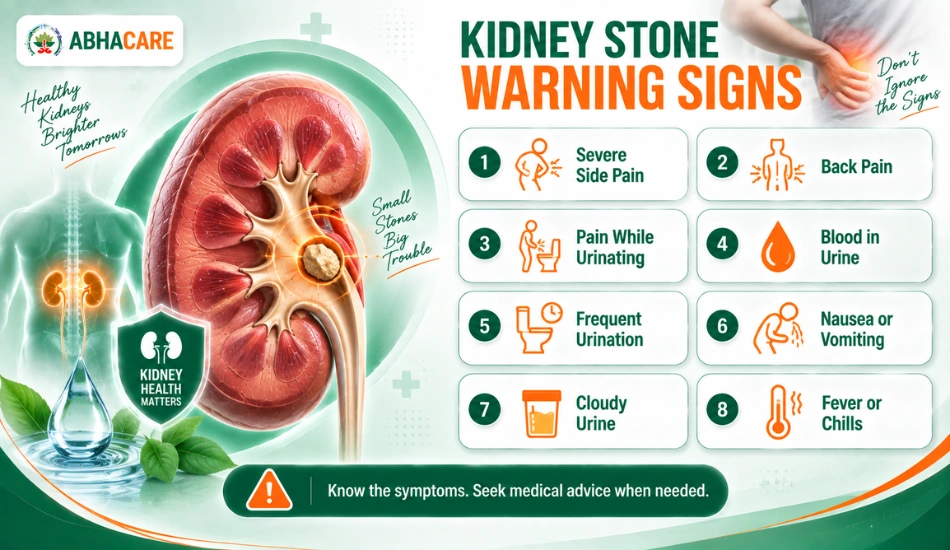
The most common kidney stone symptoms are sharp pain in the back or side (below the ribs) that may radiate to the lower abdomen and groin, pain that comes in waves, blood in the urine (pink, red, or brown), nausea or vomiting, a frequent or urgent need to urinate, pain or burning while urinating, and cloudy or foul-smelling urine. Fever and chills alongside these symptoms can signal a kidney infection and need urgent medical attention. Some small stones cause no symptoms at all and are only found incidentally on a scan.
1. Sharp Pain in the Back or Side (Flank Pain)
What it feels like: A sudden, sharp, cramping pain below the ribs, on one side of the back or torso — often described as one of the most intense pains a person can experience.
This is usually the first sign that sends people to a doctor. The pain happens because a stone is blocking urine flow, causing the kidney to swell. As the stone moves through the urinary tract, the pain's location often shifts too — starting in the back or side and moving toward the lower abdomen and groin as the stone travels down the ureter.
2. Pain That Comes in Waves
What it feels like: Pain that intensifies, eases slightly, then intensifies again, rather than staying constant.
This "waxing and waning" pattern — called renal colic — happens as the ureter contracts to try to push the stone along. It's a fairly distinctive feature of kidney stone pain compared to other causes of back or abdominal pain, which tend to be more constant.
3. Blood in the Urine (Hematuria)
What it looks like: Urine that appears pink, red, or brown; sometimes blood is only detectable on a urine test, not visible to the eye.
The stone's sharp edges can irritate or scratch the lining of the urinary tract as it moves, causing bleeding. Even small amounts of blood — visible or not — are a reason to get evaluated.
4. Pain or Burning During Urination
What it feels like: A sharp or burning sensation as urine passes, especially noticeable once a stone has moved down closer to the bladder.
This can easily be mistaken for a urinary tract infection, since the sensation is similar — which is part of why a proper diagnosis (not self-treatment) matters.
5. Frequent or Urgent Need to Urinate
What it feels like: Needing to urinate more often than usual, or a sudden, strong urge, even when little urine actually comes out.
This tends to happen when a stone reaches the lower part of the urinary tract, closer to the bladder, irritating the bladder wall.
6. Nausea and Vomiting
Why it happens: The kidneys and gastrointestinal tract share nerve pathways, so severe kidney pain often triggers nausea or vomiting as a side effect — not because anything is wrong with the stomach itself.
This symptom, combined with severe flank pain, is a common combination that brings people to the emergency room.
7. Cloudy or Foul-Smelling Urine
What it signals: A change in your urine's normal appearance or smell — often a sign that infection has developed alongside the stone, or that the urine is more concentrated than usual.
This symptom alone isn't always urgent, but combined with fever or chills, it needs prompt attention (see the red-flag section below).
8. Fever and Chills — A Red Flag, Not a Routine Symptom
Why this one is different: Unlike the symptoms above, fever and chills alongside kidney stone symptoms can indicate the stone has caused a kidney infection — a situation that can become serious quickly if untreated.
If you have flank pain plus fever or chills, this needs urgent — not routine — medical attention.
Do Kidney Stones Always Cause Symptoms?
No. Many kidney stones, especially small ones still inside the kidney, cause no symptoms at all and are discovered incidentally during an unrelated scan. Symptoms typically start once a stone begins moving into the ureter — the tube connecting the kidney to the bladder — where it can cause blockage and pain. This is why some people are surprised to learn they have a stone, while others experience sudden, severe pain with no warning.
Do Symptoms Differ Between Men and Women?
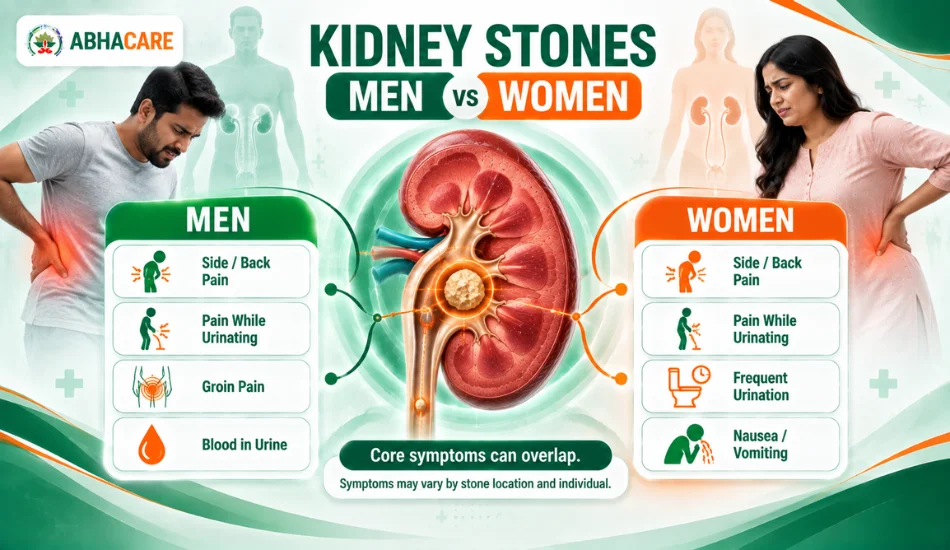
The core symptoms — flank pain, blood in urine, nausea, urinary changes — are the same for men and women. Two practical differences are worth knowing:
Pain location can be confused with other conditions. In women, lower abdominal kidney stone pain is sometimes mistaken for gynecological issues (like ovarian cysts) before a stone is confirmed. In men, pain radiating to the groin is sometimes mistaken for a testicular problem.
This is exactly why self-diagnosis is unreliable — the symptom pattern overlaps with several other conditions, and imaging is usually needed to confirm a kidney stone specifically.
When Should You See a Doctor?
See a doctor promptly if you have:
- Flank or back pain that doesn't go away
- Visible blood in your urine
- Pain severe enough to interfere with daily activity
Seek urgent/emergency care if you have:
- Severe pain combined with fever or chills (possible infection)
- Persistent vomiting alongside pain
- Inability to urinate at all
- Pain so severe you can't sit still or find a comfortable position
Kidney stone pain is not something to "wait out" if it's severe — especially with fever, since an infected, obstructed kidney can become a medical emergency. If you're experiencing these symptoms, Get urgent evaluation for kidney stone symptoms rather than waiting to see if the pain passes.
How Are Kidney Stones Diagnosed?
A doctor typically confirms a kidney stone through:
- Physical examination and symptom history
- Urine test — to check for blood, infection, and crystal-forming minerals
- Imaging — CT scan (most accurate), ultrasound, or X-ray, depending on the situation
- Blood test — to assess kidney function and calcium levels
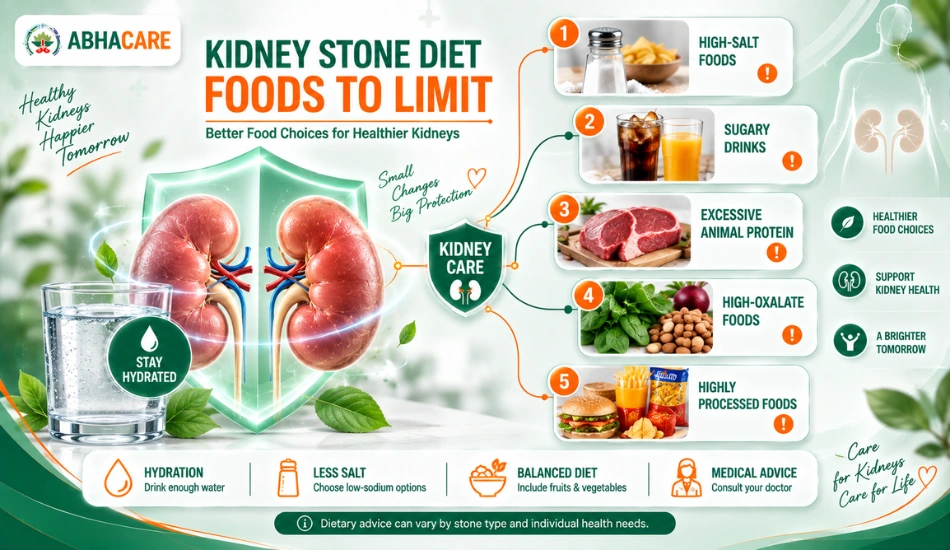
This is also when stone type is typically identified, which matters directly for prevention — see our guide on foods to avoid for kidney stones for how diet advice depends on stone type.
Frequently Asked Questions (FAQs)
What does kidney stone pain feel like?
▼Sharp, cramping pain below the ribs on one side of the back, often coming in waves and radiating toward the lower abdomen and groin as the stone moves through the urinary tract.
Can you have a kidney stone with no symptoms?
▼Yes — small stones still inside the kidney often cause no symptoms and are found incidentally on imaging done for another reason.
How long do kidney stone symptoms last?
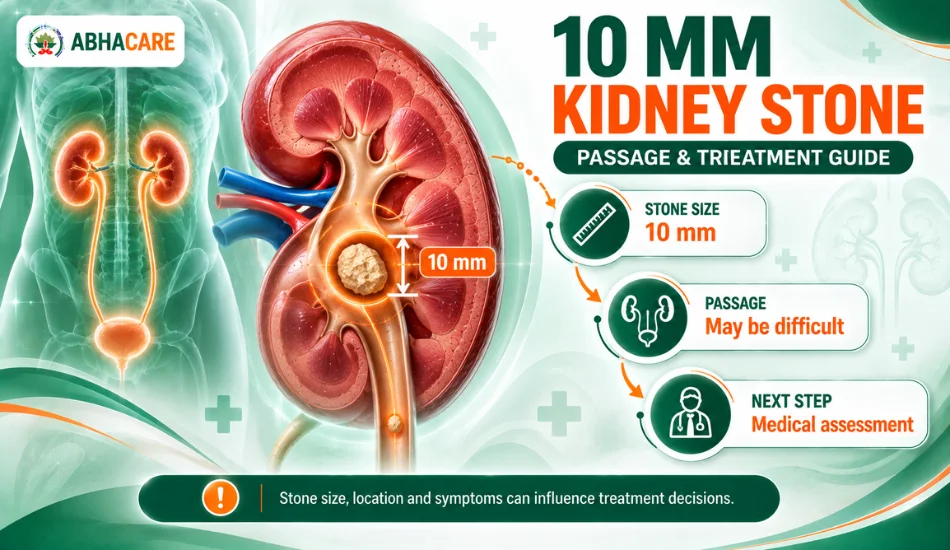
▼This varies widely depending on stone size and location — some stones pass within days, while larger stones causing persistent blockage may require medical intervention. A doctor can estimate likely passage based on stone size on imaging.
Is kidney stone pain worse than childbirth?
▼Pain tolerance is individual and hard to compare directly, but kidney stone pain (renal colic) is consistently described by patients and doctors as among the most severe types of acute pain, often compared to labor pain in intensity.
Can stress cause kidney stones?
▼Stress itself doesn't directly cause kidney stones, but dehydration, poor diet, and disrupted routines during stressful periods can indirectly raise risk — hydration and diet remain the primary controllable factors.
Think You Might Have a Kidney Stone?
Don't wait out severe or worsening pain — an accurate diagnosis is the fastest way to relief. Get urgent evaluation for kidney stone symptoms and take the first step toward a clear diagnosis.