Things to Avoid Before and After LASIK Eye Surgery
LASIK eye surgery is one of the most popular and effective vision correction procedures available today. It helps reduce or eliminate dependence on glasses and contact lenses by reshaping the cornea using advanced laser technology. While the procedure itself is quick and minimally invasive, proper preparation before surgery and careful post-operative care are essential for achieving the best results.
Many patients focus on the surgery itself but overlook the importance of following precautions before and after the procedure. Avoiding certain activities, medications, and habits can significantly improve healing, reduce complications, and help ensure optimal vision outcomes.
In this comprehensive guide, we will discuss the most important things to avoid before and after LASIK eye surgery, along with recovery tips, timelines, and expert recommendations.
Table of Contents
1. What Is LASIK Eye Surgery?
2. Why Pre- and Post-Surgery Care Matters
3. Things to Avoid Before LASIK Surgery
4. What to Do Before LASIK Surgery
5. Things to Avoid Immediately After LASIK Surgery
6. Things to Avoid During LASIK Recovery
7. Recovery Timeline After LASIK
8. Warning Signs to Watch For
9. Tips for Faster Recovery
10. Frequently Asked Questions
11. Conclusion
What Is LASIK Eye Surgery?
LASIK (Laser-Assisted In Situ Keratomileusis) is a refractive eye surgery used to correct common vision problems such as:
- Nearsightedness (Myopia)
- Farsightedness (Hyperopia)
- Astigmatism
During the procedure, a specialized laser reshapes the cornea so that light focuses properly on the retina, resulting in clearer vision.
Why Pre- and Post-Surgery Care Matters
LASIK surgery has a high success rate, but your results depend greatly on how well you follow the surgeon's instructions. Proper care helps:
- Reduce the risk of infection
- Improve healing speed
- Minimize eye irritation
- Reduce complications
- Enhance visual outcomes
- Improve long-term eye health
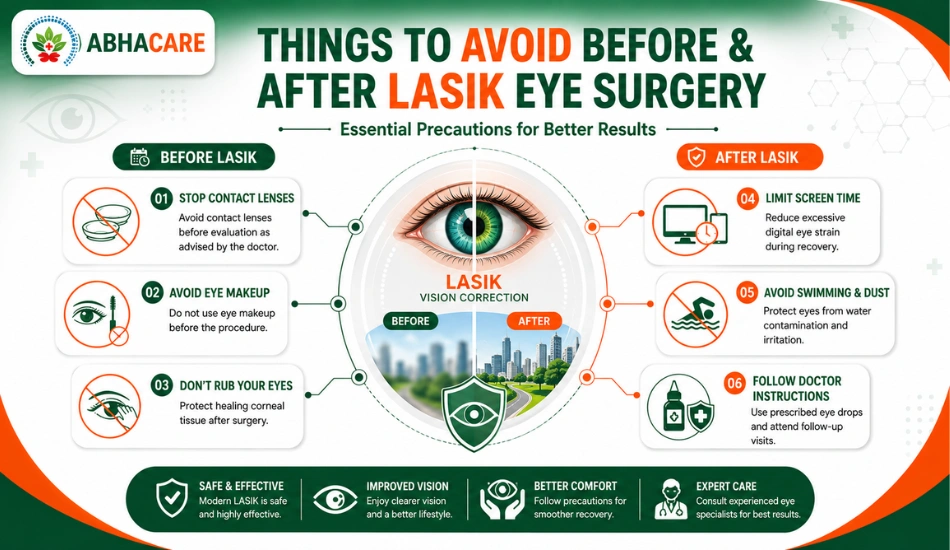
Things to Avoid Before LASIK Surgery
Preparing for LASIK begins several days or weeks before the procedure. Certain habits can affect the shape of the cornea and interfere with surgical planning.
| What to Avoid | Why It Matters |
|---|---|
| Contact Lenses | Can temporarily alter corneal shape |
| Eye Makeup | Increases infection risk |
| Lotions and Creams Around Eyes | May interfere with the procedure |
| Alcohol Consumption | Can contribute to dry eyes |
| Smoking | May slow healing and worsen dryness |
| Self-Medicating Eye Drops | Can affect eye health assessment |
Avoid Contact Lenses Before Surgery
Contact lenses can temporarily change the natural shape of the cornea, which may affect pre-surgical measurements.
| Lens Type | Recommended Discontinuation Period |
|---|---|
| Soft Contact Lenses | At least 1 week before surgery |
| Toric Contact Lenses | 2–3 weeks before surgery |
| Rigid Gas Permeable Lenses | Several weeks as advised by surgeon |
What to Do Before LASIK Surgery
Attend all pre-operative evaluations
Follow medication instructions carefully
Arrange transportation for surgery day
Get adequate sleep before the procedure
Stay hydrated
Discuss any medical conditions with your surgeon
Things to Avoid Immediately After LASIK Surgery
The first 24–48 hours after LASIK are crucial for healing. Following your surgeon's instructions can significantly improve recovery.
| Activity to Avoid | Reason |
|---|---|
| Rubbing Your Eyes | Can disturb corneal healing |
| Touching the Eyes | Increases infection risk |
| Driving Immediately | Vision may be temporarily blurry |
| Heavy Exercise | Can increase irritation |
| Dusty Environments | May cause discomfort and infection |
Do Not Rub Your Eyes
This is one of the most important LASIK recovery instructions. Even if your eyes feel itchy or irritated, rubbing them can interfere with healing and potentially affect visual outcomes.
Things to Avoid During LASIK Recovery
1. Swimming Pools and Hot Tubs
Avoid swimming pools, hot tubs, lakes, and other water bodies for at least a few weeks because water may contain bacteria that increase infection risk.
2. Eye Makeup
Avoid eye makeup until your surgeon confirms it is safe. Makeup particles can irritate healing eyes and introduce bacteria.
3. Excessive Screen Time
Digital screens can worsen eye dryness after LASIK. Limit screen use during the first few days and take frequent breaks.
4. Exposure to Dust and Smoke
Dust, smoke, pollution, and strong winds may irritate sensitive eyes during recovery.
5. Contact Sports
Avoid sports such as football, boxing, basketball, and martial arts until your surgeon permits returning to these activities.
6. Skipping Eye Drops
Prescribed antibiotic and lubricating eye drops play a vital role in healing. Missing doses may delay recovery.
Recovery Timeline After LASIK
| Recovery Stage | What to Expect |
|---|---|
| First 24 Hours | Mild discomfort, tearing, light sensitivity |
| 2–3 Days | Vision starts becoming clearer |
| 1 Week | Most daily activities can resume |
| 1 Month | Continued visual improvement |
| 3–6 Months | Vision stabilizes fully |
Warning Signs to Watch For
Contact your eye surgeon immediately if you experience:
- Severe eye pain
- Sudden vision loss
- Persistent redness
- Excessive discharge
- Worsening blurred vision
- Flashes of light or new floaters
Early medical attention can prevent complications and protect your vision.
Tips for Faster Recovery After LASIK
| Recovery Tip | Benefit |
|---|---|
| Use Prescribed Eye Drops | Supports healing and lubrication |
| Wear Protective Eyewear | Prevents accidental eye injury |
| Get Adequate Rest | Allows faster recovery |
| Stay Hydrated | Helps reduce eye dryness |
| Attend Follow-Up Visits | Ensures proper healing |
Conclusion
Understanding the most important things to avoid before and after LASIK eye surgery is essential for achieving the best possible vision results. Avoiding contact lenses before surgery, protecting the eyes during recovery, using prescribed medications, and following all post-operative instructions can significantly improve healing and reduce complications. With proper care and regular follow-up visits, most patients experience excellent visual outcomes and enjoy long-term freedom from glasses or contact lenses.