Introduction
Anal fistula is a painful and often recurring anorectal condition that develops when an abnormal tunnel forms between the anal canal and the skin near the anus. While many people focus on treatment options, understanding the causes of anal fistula is equally important for prevention and early diagnosis. In most cases, anal fistulas do not develop suddenly. They usually occur as a result of infections, abscesses, or underlying medical conditions that affect the tissues around the anus.
Knowing why anal fistulas develop can help patients recognize warning signs early and seek timely medical attention before complications arise.
Table of Contents
1. What Is an Anal Fistula?
2. How Does an Anal Fistula Develop?
3. Common Causes of Anal Fistula
4. Risk Factors That Increase the Chances of Anal Fistula
5. Symptoms Associated with Anal Fistula
6. Can Anal Fistulas Be Prevented?
7. When Should You See a Doctor?
8. FAQs
9. Conclusion
What Is an Anal Fistula?
An anal fistula is a small tunnel that develops between an infected gland inside the anus and the skin surrounding the anal opening. The tunnel allows pus or infected fluid to drain continuously, leading to discomfort, swelling, and recurring infections.
Most anal fistulas are the result of a previous anal abscess that did not heal completely.
How Does an Anal Fistula Develop?
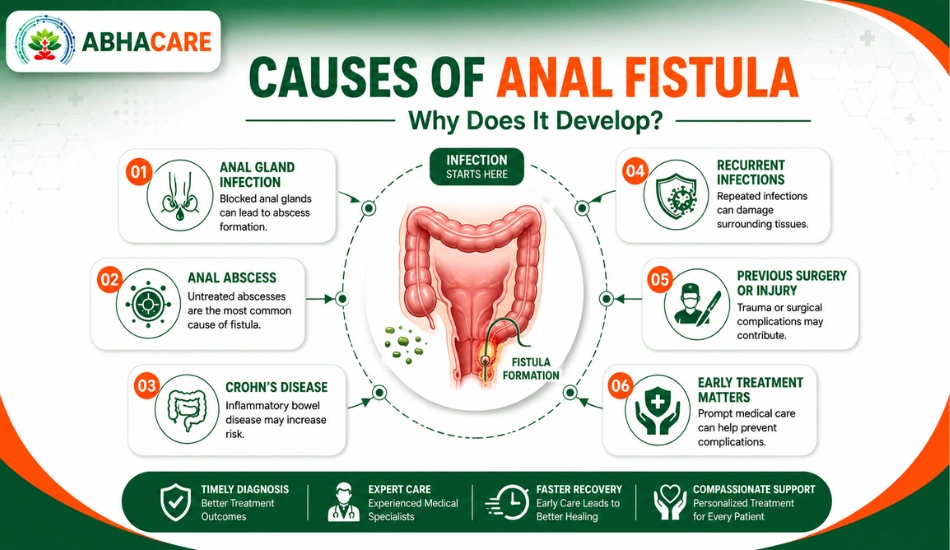
The anal canal contains small glands that produce mucus. If one of these glands becomes blocked, bacteria can multiply inside it and create an infection. Over time, the infection may form an abscess filled with pus.
If the abscess bursts or drains incompletely, an abnormal passage may remain between the infected gland and the skin. This passage becomes an anal fistula.
| Stage | What Happens |
|---|---|
| Gland Blockage | Anal gland becomes obstructed |
| Infection | Bacteria multiply and cause inflammation |
| Abscess Formation | Pus collects in the infected area |
| Drainage | Abscess bursts or is drained |
| Fistula Formation | Tunnel develops between anus and skin |
Common Causes of Anal Fistula
The following are the most common causes of anal fistula:
| Cause | How It Leads to Anal Fistula |
|---|---|
| Anal Abscess | Most common cause of fistula formation |
| Chronic Infection | Repeated infections damage surrounding tissues |
| Crohn's Disease | Inflammation in the digestive tract increases fistula risk |
| Tuberculosis | Can cause chronic infection around the anus |
| Trauma or Injury | Damage to anal tissues may create abnormal passages |
| Previous Anal Surgery | Rarely contributes to fistula development |
| Radiation Therapy | May affect tissue healing and increase risk |
| Sexually Transmitted Infections | Certain infections may cause tissue inflammation |
Anal Abscess: The Leading Cause of Anal Fistula
Research shows that the majority of anal fistulas develop after an anal abscess. An abscess is a painful collection of pus caused by bacterial infection.
Even after treatment, some abscesses leave behind a tunnel connecting the infected gland to the skin surface. This tunnel becomes a fistula and may continue to discharge fluid or pus.
Risk Factors That Increase Anal Fistula Development
| Risk Factor | Impact |
|---|---|
| Diabetes | Increases infection risk and delays healing |
| Weak Immune System | Makes infections more likely |
| Inflammatory Bowel Disease | Promotes chronic inflammation |
| Smoking | Reduces tissue healing ability |
| Poor Anal Hygiene | May increase bacterial growth |
| Obesity | Associated with higher infection risk |
Symptoms of Anal Fistula
Recognizing symptoms early can help prevent complications.
Persistent pain around the anus
Swelling and redness
Pus discharge near the anus
Blood-stained discharge
Skin irritation and itching
Pain while sitting
Recurring anal abscesses
Fever in some cases
Can Anal Fistulas Be Prevented?
While not all anal fistulas can be prevented, certain habits may reduce the risk of infections and complications.
| Prevention Tip | Benefit |
|---|---|
| Maintain Good Hygiene | Reduces bacterial growth |
| Treat Anal Abscess Early | Prevents fistula formation |
| Control Diabetes | Supports better healing |
| Eat a High-Fiber Diet | Promotes healthy bowel movements |
| Stay Hydrated | Reduces constipation risk |
| Avoid Smoking | Improves tissue repair |
When Should You See a Doctor?
You should consult a specialist if you notice:
Repeated pus discharge
Persistent anal pain
Recurring abscesses
Swelling near the anus
Bleeding or irritation that does not improve
Early diagnosis can prevent the fistula from becoming more complex and difficult to treat.
Conclusion
Understanding the causes of anal fistula is the first step toward prevention and early treatment. Most anal fistulas develop due to untreated anal abscesses, but chronic infections, inflammatory bowel diseases, and other medical conditions can also contribute. Early diagnosis and timely medical care can reduce complications, improve treatment outcomes, and help patients return to normal life more quickly.