Introduction
Recovering from an anal fissure requires more than just medication or treatment. Your daily diet plays a crucial role in reducing pain, preventing constipation, and promoting faster healing. One of the most common reasons fissures take longer to heal is the continued passage of hard stools, which repeatedly irritates the affected area. Following the right foods to eat during anal fissure recovery can help soften bowel movements, reduce strain, and support the body's natural healing process.
In this complete guide, you'll learn which foods can speed up recovery, which foods should be avoided, and how simple dietary changes can help prevent fissure recurrence.
Table of Contents
1. Why Diet Matters During Anal Fissure Recovery
2. Best Foods to Eat During Anal Fissure Recovery
3. High-Fiber Foods for Faster Healing
4. Hydration and Its Importance
5. Foods to Avoid During Anal Fissure Recovery
6. Sample Diet Plan for Anal Fissure Patients
7. Additional Recovery Tips
8. FAQs
9. Conclusion
Why Diet Matters During Anal Fissure Recovery
An anal fissure is a small tear in the lining of the anus that often causes severe pain, burning, and bleeding during bowel movements. The main goal of dietary management is to keep stools soft and easy to pass.
A proper fissure-friendly diet helps:
Reduce constipation
Minimize strain during bowel movements
Promote faster healing
Reduce pain and discomfort
Lower the risk of recurrence
Best Foods to Eat During Anal Fissure Recovery
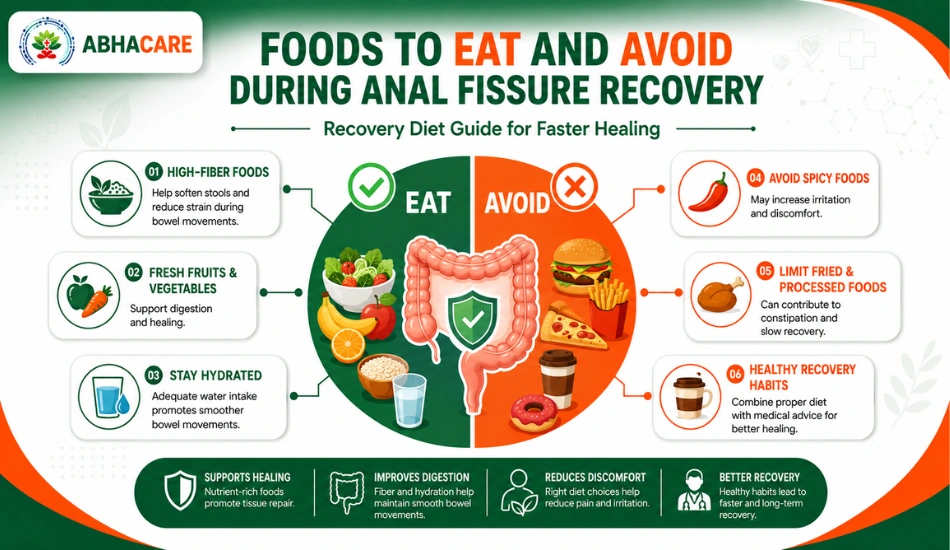
The following foods are highly recommended during anal fissure recovery because they support healthy digestion and prevent hard stools.
| Food | Benefit |
|---|---|
| Oats | Rich in soluble fiber that softens stool |
| Whole Wheat Bread | Improves bowel regularity |
| Brown Rice | Provides fiber and easy digestion |
| Papaya | Supports healthy bowel movements |
| Bananas | Gentle on the digestive system |
| Apples | Contain fiber that aids digestion |
| Pears | Help prevent constipation |
| Leafy Green Vegetables | High in fiber and nutrients |
| Carrots | Promote digestive health |
| Sweet Potatoes | Support soft stool formation |
High-Fiber Foods for Faster Healing
Fiber is one of the most important nutrients during fissure recovery.
| High-Fiber Food | Approximate Fiber Content |
|---|---|
| Chia Seeds | High |
| Flax Seeds | High |
| Lentils | Moderate to High |
| Beans | High |
| Peas | Moderate |
| Whole Grains | Moderate to High |
Gradually increase fiber intake to avoid bloating and digestive discomfort.
Hydration: The Key to Soft Stools
Even the best diet may not work effectively without adequate water intake. Fiber absorbs water and helps keep stools soft.
Drink 2–3 liters of water daily
Include coconut water when appropriate
Consume fresh fruit juices without added sugar
Drink soups and clear fluids
Proper hydration is essential for successful anal fissure recovery.
Foods to Avoid During Anal Fissure Recovery
Certain foods can worsen constipation, irritate the digestive tract, and delay healing.
| Foods to Avoid | Reason |
|---|---|
| Spicy Foods | May increase irritation during bowel movements |
| Deep-Fried Foods | Difficult to digest |
| Fast Food | Low fiber content |
| Processed Snacks | Can worsen constipation |
| White Bread | Low fiber |
| Excess Cheese | May contribute to constipation |
| Soft Drinks | Offer little nutritional value |
| Excessive Tea and Coffee | May contribute to dehydration |
Sample Diet Plan for Anal Fissure Patients
| Meal | Recommended Foods |
|---|---|
| Breakfast | Oatmeal, banana, and warm water |
| Mid-Morning | Papaya or apple |
| Lunch | Brown rice, dal, vegetables, and salad |
| Evening Snack | Fruit bowl or coconut water |
| Dinner | Whole wheat roti, vegetables, and soup |
Additional Recovery Tips
Do not delay bowel movements
Exercise regularly
Take warm sitz baths if recommended
Avoid prolonged sitting
Follow prescribed medications
Maintain proper anal hygiene
Conclusion
Choosing the right foods to eat during anal fissure recovery can significantly improve healing, reduce pain, and prevent future complications. A diet rich in fiber, fruits, vegetables, whole grains, and adequate fluids helps maintain soft stools and supports digestive health. At the same time, avoiding processed, spicy, and low-fiber foods can reduce irritation and speed up recovery. Consistency with these dietary habits can make a major difference in long-term fissure management and overall digestive wellness.