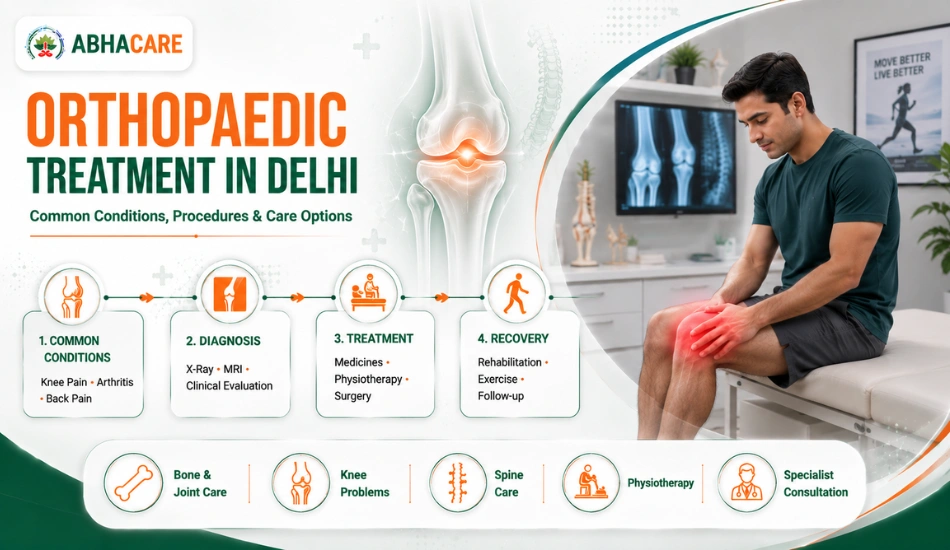
Orthopaedic Treatment in Delhi: Common Conditions, Procedures and Care Options
Orthopaedic health plays an important role in maintaining mobility, independence, and quality of life. Problems affecting the bones, joints, muscles, ligaments, tendons, cartilage, and spine can make everyday activities such as walking, climbing stairs, exercising, or even getting out of bed difficult. Some conditions develop gradually due to age-related wear and tear, while others occur because of injuries, accidents, sports activities, or underlying medical conditions.
Orthopaedic treatment in Delhi covers a wide range of conditions, from common joint pain and arthritis to fractures, ligament injuries, spine problems, sports injuries, and conditions requiring joint replacement or minimally invasive surgery. The right treatment depends on the cause, severity of symptoms, age, activity level, medical history, and overall health of the patient.
This guide explains common orthopaedic conditions, available treatment options, diagnostic tests, surgical and non-surgical procedures, recovery, and practical ways to protect your bone and joint health.
Table of Contents
1. What Is Orthopaedic Treatment?
2. What Does an Orthopaedic Doctor Treat?
3. Common Orthopaedic Conditions
4. Common Symptoms You Should Not Ignore
5. How Orthopaedic Problems Are Diagnosed
6. Non-Surgical Orthopaedic Treatment Options
7. Common Orthopaedic Procedures and Surgeries
8. Knee Treatment Options
9. Hip Treatment Options
10. Shoulder and Elbow Treatment
11. Spine and Back Care
12. Fracture and Trauma Care
13. Sports Injury Treatment
14. Orthopaedic Rehabilitation and Physiotherapy
15. When Should You See an Orthopaedic Doctor?
16. How to Protect Your Bones and Joints
17. Frequently Asked Questions
18. Conclusion
What Is Orthopaedic Treatment?
Orthopaedics is a medical specialty focused on diagnosing, treating, and preventing problems involving the musculoskeletal system. This includes the bones, joints, muscles, ligaments, tendons, cartilage, and related structures that help the body move and remain stable.
Orthopaedic care can range from simple measures such as activity modification and physiotherapy to advanced procedures such as arthroscopy, fracture fixation, ligament reconstruction, and joint replacement.
Treatment is not automatically surgery. In many cases, doctors initially recommend conservative treatment and monitor how the patient responds before considering an operation.
What Does an Orthopaedic Doctor Treat?
An orthopaedic specialist may diagnose and manage a broad range of problems, including:
- Knee pain and arthritis
- Hip pain
- Shoulder pain
- Back and neck problems
- Sports injuries
- Ligament and tendon injuries
- Fractures and dislocations
- Meniscus injuries
- ACL injuries
- Rotator cuff problems
- Osteoarthritis
- Rheumatoid arthritis-related joint problems
- Osteoporosis-related fractures
- Carpal tunnel syndrome
- Joint stiffness
- Bone infections
- Certain bone and soft-tissue conditions
Some complex conditions may require collaboration between an orthopaedic surgeon, physiotherapist, pain specialist, radiologist, or other medical professionals.
Common Orthopaedic Conditions
1. Osteoarthritis
Osteoarthritis is a common joint condition associated with progressive changes in cartilage and other joint structures. It frequently affects the knees, hips, hands, and spine.
Common symptoms include:
- Joint pain
- Stiffness
- Reduced range of motion
- Swelling
- Difficulty walking
- Pain after prolonged activity
Treatment may include exercise, physiotherapy, weight management, medications, injections in selected cases, and surgery when symptoms become severe and significantly affect daily life.
2. Knee Arthritis
Knee arthritis can make walking, climbing stairs, sitting down, and standing up increasingly difficult.
Early management may involve:
- Strengthening exercises
- Physiotherapy
- Weight management
- Activity modification
- Pain management
For advanced arthritis with significant pain and functional limitations, knee replacement may be considered after a detailed evaluation.
3. ACL Injury
The anterior cruciate ligament (ACL) helps stabilize the knee. ACL injuries are common in sports involving sudden stops, jumping, pivoting, or changes in direction.
Symptoms can include:
- A popping sensation at the time of injury
- Knee swelling
- Pain
- Difficulty bearing weight
- Knee instability
Some injuries can be managed with rehabilitation, while others may require ACL reconstruction depending on activity level, instability, associated injuries, and individual goals.
4. Meniscus Injury
The menisci are cartilage structures that help absorb shock inside the knee. A tear can occur during sports, twisting movements, or age-related degeneration.
Treatment depends on the type and location of the tear and may include physiotherapy, activity modification, medications, or arthroscopic surgery in selected patients.
5. Frozen Shoulder
Frozen shoulder causes pain and progressive stiffness of the shoulder joint. Everyday activities such as dressing, reaching overhead, or moving the arm behind the back can become difficult.
Treatment commonly focuses on:
- Pain control
- Stretching
- Physiotherapy
- Range-of-motion exercises
Recovery can take time, so following a structured rehabilitation program is important.
6. Rotator Cuff Problems
The rotator cuff is a group of muscles and tendons that stabilizes the shoulder.
Injuries may cause:
- Shoulder pain
- Weakness
- Difficulty lifting the arm
- Pain while sleeping
- Reduced shoulder movement
Depending on the severity, treatment may include physiotherapy, medication, injections, or surgery.
7. Fractures
A fracture is a break or crack in a bone. Fractures can result from falls, road accidents, sports injuries, or weakened bones.
Treatment depends on the location and type of fracture and may involve:
- Splinting
- Casting
- Bracing
- Closed reduction
- Surgical fixation
- Rehabilitation
Severe fractures may require plates, screws, rods, or other fixation devices.
Common Symptoms You Should Not Ignore
Not every episode of pain requires surgery, but persistent or worsening symptoms deserve professional assessment.
Consider an orthopaedic evaluation if you have:
Persistent Joint Pain
Pain that continues despite rest or routine measures may require evaluation to identify its underlying cause.
Swelling
Persistent swelling around a joint can occur with arthritis, injury, inflammation, or internal joint damage.
Limited Movement
Difficulty bending, straightening, lifting, or rotating a joint may indicate a musculoskeletal problem.
Joint Instability
A knee, ankle, or shoulder that repeatedly gives way should be assessed.
Persistent Back or Neck Pain
Pain accompanied by weakness, numbness, or changes in bladder or bowel control requires urgent medical attention.
Difficulty Walking
New or worsening difficulty walking can result from joint disease, injury, nerve problems, or other conditions.
Deformity After Injury
Visible changes in the shape or alignment of a limb after trauma may indicate a fracture or dislocation.
How Orthopaedic Problems Are Diagnosed
A proper diagnosis usually starts with a detailed medical history and physical examination.
Your orthopaedic doctor may evaluate:
- Location of pain
- Duration of symptoms
- Previous injuries
- Range of motion
- Muscle strength
- Joint stability
- Walking pattern
- Swelling or tenderness
- Lifestyle and activity level
Depending on the findings, diagnostic tests may be recommended.
X-Ray
X-rays are commonly used to identify fractures, joint-space changes, bone alignment problems, and advanced arthritis.
MRI
MRI provides detailed images of soft tissues and can help assess:
- Ligaments
- Menisci
- Tendons
- Cartilage
- Muscles
- Spinal structures
CT Scan
CT imaging provides detailed views of bone and can be particularly useful for complex fractures and certain surgical planning situations.
Ultrasound
Musculoskeletal ultrasound can help assess selected tendons, muscles, fluid collections, and soft-tissue problems.
Blood Tests
Blood tests may be useful when infection, inflammatory arthritis, or certain metabolic conditions are suspected.
Non-Surgical Orthopaedic Treatment Options
Surgery is only one part of orthopaedic care. Many patients improve with appropriate non-surgical treatment.
Physiotherapy
Physiotherapy can improve:
- Muscle strength
- Flexibility
- Balance
- Joint movement
- Functional ability
A personalized exercise program is often more useful than continuing exercises that are not appropriate for the specific diagnosis.
Medication
Depending on the condition, doctors may prescribe pain-relieving or anti-inflammatory medicines. These should be taken according to medical advice because some medicines can cause side effects or may not be suitable for people with certain medical conditions.
Weight Management
Excess body weight increases stress on weight-bearing joints, particularly the knees and hips. Maintaining a healthy weight may reduce joint load and improve mobility.
Activity Modification
Temporarily reducing activities that aggravate pain can help the affected tissue recover while maintaining safe movement and rehabilitation.
Injections
In selected cases, doctors may consider joint or soft-tissue injections. The appropriate injection depends on the diagnosis and individual circumstances.
Common Orthopaedic Procedures and Surgeries
When conservative treatment does not provide sufficient improvement or when structural damage is severe, surgery may be considered.
Knee Replacement Surgery
Knee replacement may be recommended for advanced knee arthritis causing persistent pain, severe stiffness, and significant difficulty with daily activities despite appropriate non-surgical treatment.
During the procedure, damaged joint surfaces are replaced with artificial components designed to restore function and reduce pain.
Hip Replacement Surgery
Hip replacement may be considered for advanced hip joint damage, commonly associated with severe arthritis or certain fractures.
The damaged portions of the joint are replaced with prosthetic components to improve mobility and reduce pain.
Arthroscopic Surgery
Arthroscopy is a minimally invasive surgical technique in which a small camera is inserted into a joint through a small incision.
It may be used for selected conditions involving the:
- Knee
- Shoulder
- Ankle
- Elbow
- Other joints
The exact procedure depends on the diagnosed problem.
ACL Reconstruction
ACL reconstruction may be recommended for selected patients with significant knee instability, particularly those who want to return to pivoting sports or have associated knee injuries.
Rehabilitation is an essential part of recovery after ACL surgery.
Fracture Fixation Surgery
Some fractures cannot heal properly with casting or bracing alone. In such situations, surgery may be needed to realign and stabilize the bone.
Depending on the fracture, surgeons may use:
- Plates
- Screws
- Rods
- Wires
- External fixation devices
Spine Surgery
Most back pain does not require surgery. However, selected patients with conditions such as significant nerve compression, spinal instability, or certain structural problems may require surgical treatment after appropriate evaluation.
Knee Treatment Options
Knee problems are among the most common reasons people seek orthopaedic care.
Treatment depends on the underlying cause.
| Condition | Common Treatment Approach |
|---|---|
| Mild arthritis | Exercise, physiotherapy, lifestyle changes |
| Advanced arthritis | Medical management, selected injections, possible replacement |
| ACL injury | Rehabilitation or reconstruction in selected cases |
| Meniscus tear | Physiotherapy or arthroscopy in selected cases |
| Knee fracture | Immobilization or surgical fixation |
| Sports injury | Rest, rehabilitation, and condition-specific treatment |
The goal is not simply to treat pain but to identify and manage the underlying problem.
Hip Treatment Options
Hip pain may result from arthritis, injury, muscle or tendon problems, or other conditions.
Treatment can include:
- Activity modification
- Physiotherapy
- Weight management
- Medication
- Selected injections
- Hip replacement for advanced joint damage
Persistent hip pain should be evaluated rather than managed indefinitely with self-medication.
Shoulder and Elbow Treatment
Shoulder and elbow problems can interfere with work, sports, lifting, and daily activities.
Common conditions include:
- Frozen shoulder
- Rotator cuff disorders
- Tennis elbow
- Golfer's elbow
- Shoulder arthritis
- Dislocations
- Fractures
Treatment may include physiotherapy, activity modification, medications, injections, or surgery depending on the condition.
Spine and Back Care
Back pain is extremely common, but its causes vary widely.
Possible causes include:
- Muscle strain
- Disc-related problems
- Arthritis
- Spinal stenosis
- Nerve compression
- Poor posture
- Injury
Most uncomplicated back pain improves with appropriate conservative treatment. However, symptoms such as progressive weakness, severe numbness, difficulty walking, or loss of bladder or bowel control require urgent medical assessment.
Fracture and Trauma Care
Orthopaedic trauma can occur because of:
- Road accidents
- Falls
- Sports injuries
- Workplace injuries
- Osteoporosis-related falls
Prompt evaluation helps determine whether the injury requires a cast, brace, reduction, or surgery.
After the bone has stabilized, rehabilitation helps restore strength and movement.
Sports Injury Treatment
Sports injuries commonly affect the knees, ankles, shoulders, elbows, and muscles.
Common injuries include:
- ACL tears
- Meniscus injuries
- Ankle sprains
- Muscle strains
- Tendon injuries
- Shoulder dislocations
Treatment should focus not only on pain relief but also on restoring strength, flexibility, balance, and movement patterns before returning to sport.
Returning to intense activity too quickly can increase the risk of reinjury.
Orthopaedic Rehabilitation and Physiotherapy
Recovery does not end after surgery or when pain begins to improve. Rehabilitation is often an important part of successful orthopaedic care.
A rehabilitation program may focus on:
- Restoring joint movement
- Building muscle strength
- Improving balance
- Reducing stiffness
- Correcting movement patterns
- Improving walking ability
- Returning to work or sports safely
The rehabilitation timeline varies according to the condition and procedure.
When Should You See an Orthopaedic Doctor?
Consider consulting an orthopaedic specialist when:
- Joint pain persists for several weeks.
- Pain repeatedly returns after activity.
- You have difficulty walking or climbing stairs.
- A joint repeatedly gives way.
- There is persistent swelling or stiffness.
- You have limited joint movement.
- You sustained a significant injury.
- You have persistent back or neck pain.
- You experience weakness or numbness with musculoskeletal symptoms.
After an injury, severe pain, obvious deformity, inability to bear weight, or rapidly increasing swelling should be evaluated promptly.
How to Protect Your Bones and Joints
Healthy habits can support musculoskeletal health throughout life.
Stay Physically Active
Regular, appropriate exercise strengthens muscles and supports joint function.
Maintain a Healthy Weight
Healthy weight management reduces stress on weight-bearing joints.
Eat a Balanced Diet
Include adequate protein, calcium-rich foods, Vitamin D sources, fruits, vegetables, and whole grains according to your nutritional needs.
Avoid Smoking
Smoking can negatively affect bone health and healing.
Prevent Falls
Good lighting, safe flooring, appropriate footwear, and balance exercises can reduce fall risk, especially in older adults.
Use Correct Technique During Exercise
Warm up properly and gradually increase training intensity to reduce injury risk.
Don't Ignore Persistent Pain
Pain that continues or worsens despite rest should be evaluated rather than repeatedly treated with self-medication.
Frequently Asked Questions (FAQs)
1. What does orthopaedic treatment include?
▼Orthopaedic treatment includes the diagnosis and management of conditions involving bones, joints, muscles, ligaments, tendons, cartilage, and the spine. Treatment can include physiotherapy, medicines, lifestyle changes, injections, minimally invasive procedures, or surgery when necessary.
2. Does every joint pain require surgery?
▼No. Many joint conditions improve with non-surgical treatment such as physiotherapy, exercise, weight management, activity modification, and appropriate medication. Surgery is considered when it is medically appropriate and other options are insufficient or when significant structural damage exists.
3. When is knee replacement considered?
▼Knee replacement may be considered when advanced joint damage causes persistent pain and substantial limitations in daily activities despite appropriate non-surgical management.
4. How long does orthopaedic recovery take?
▼Recovery varies significantly. A minor soft-tissue injury may improve within weeks, whereas fracture healing or recovery following joint replacement or ligament reconstruction can take several months.
5. Is physiotherapy necessary after orthopaedic surgery?
▼In many procedures, rehabilitation is an important component of recovery. The specific exercises and timeline depend on the surgery and individual patient factors.
6. How do I know whether my pain is serious?
▼Persistent pain, worsening symptoms, significant swelling, instability, inability to bear weight, deformity after injury, or associated weakness or numbness should be medically evaluated.
Conclusion
Orthopaedic problems can affect mobility, independence, work, exercise, and everyday quality of life. From arthritis and sports injuries to fractures, ligament problems, spine conditions, and advanced joint disease, the appropriate treatment depends on an accurate diagnosis and an individualized care plan.
Importantly, orthopaedic treatment in Delhi is not limited to surgery. Many patients can benefit from physiotherapy, exercise, weight management, medication, activity modification, and other conservative approaches. When surgery becomes necessary, procedures such as arthroscopy, ACL reconstruction, fracture fixation, knee replacement, hip replacement, and selected spine surgeries may help restore function and reduce pain.
If you have persistent joint pain, difficulty walking, recurring sports injuries, limited movement, or pain that is affecting your daily activities, timely evaluation can help identify the cause and prevent the problem from becoming more difficult to manage. A personalized treatment plan should always be based on your diagnosis, medical history, lifestyle, and functional goals.